

Ukraine Expands Black Sea Environmental Monitoring to the Danube Delta
 Ukraine
03.11.2026
The Ukrainian Sea Ports Authority (USPA) and the National Antarctic Scientific Center have signed a Memorandum of Cooperation aimed at strengthening environmental monitoring in the Black Sea and Ukrainian port waters.
The agreement, signed on October 30, 2026, provides for joint scientific research, environmental data exchange and the improvement of methods for assessing the condition of marine ecosystems.
The initiative aims to establish regular environmental monitoring along Ukraine’s Black Sea coastline, from the Dnipro-Bug Estuary to the mouth of the Danube, for the first time since the beginning of Russia’s full-scale invasion.
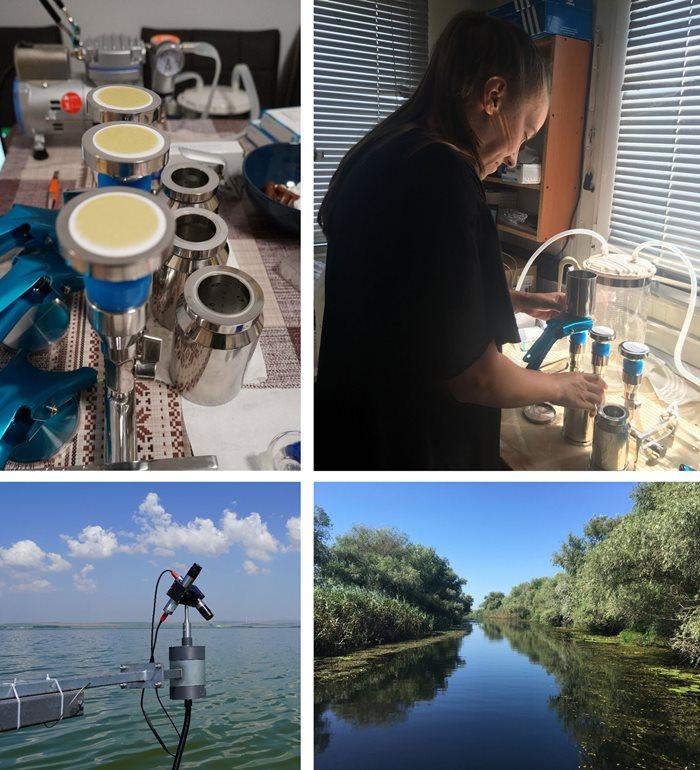
Under the agreement, the Ukrainian Sea Ports Authority will organize water sampling in port areas, while scientists will conduct laboratory analyses of physical, chemical and biological indicators.
Particular attention will be paid to identifying accidental pollution, assessing environmental risks and examining the impact of maritime activities on coastal ecosystems.
Commentary by the Institute of Danube Research (IDR)
The establishment of systematic environmental monitoring is particularly important for the Ukrainian section of the Danube Delta, where intensive economic activities, international navigation and protected natural areas coexist.
The Institute of Danube Research emphasizes that the effectiveness of this initiative will depend on the regularity of scientific observations, the comparability of environmental data and the accessibility of monitoring results.
A promising area for further cooperation is the integration of these findings with transboundary environmental monitoring systems in Romania and the Republic of Moldova, as well as with relevant mechanisms of the International Commission for the Protection of the Danube River (ICPDR).
Such cooperation could strengthen evidence-based environmental policymaking, improve the protection of the Black Sea–Danube basin and support long-term assessments of the ecological consequences of the war.

 Romania

 Moldova
 Bulgaria
 Hungary

 Austria
 Danube