

Romania Resumes Operations at Cernavodă Nuclear Power Plant's Unit 2 Following Prolonged Low Water Levels in the Danube
 Romania
09.11.2026
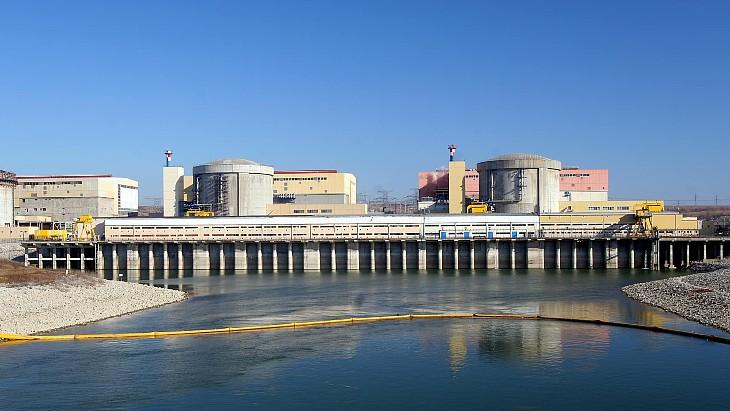
Romanian energy company Nuclearelectrica initiated the restart procedure for Unit 2 of the Cernavodă Nuclear Power Plant on 9 November 2026, following its shutdown in August due to critically low water levels in the Danube.
According to the plant operator, water levels have now reached the threshold required for the safe resumption of operations.
Unit 2 is scheduled to reconnect to Romania's national electricity grid on 10 November, with full capacity expected to be reached on 11 November 2026.
Unit 1 resumed supplying electricity to the national grid on 6 November, following a shutdown lasting more than three months.
Both units were successively shut down during the summer of 2026 due to declining water levels in the Danube, which supplies cooling water for the plant's technological systems.
According to Nuclearelectrica, once both units have fully resumed operations, the nuclear power plant will again be able to meet approximately 20% of Romania's electricity demand.
Commentary by the Institute of Danube Research
The situation surrounding the Cernavodă Nuclear Power Plant demonstrates the direct dependence of energy security in the Danube region on the river's hydrological regime.
Prolonged low water levels in the Danube are no longer exclusively a challenge for inland waterway transport. They also affect the stability of electricity generation, industrial operations and the energy resilience of countries across the region.
The resumption of nuclear power plant operations is a positive development, but it does not eliminate the systemic risks associated with changes in the Danube's water regime.
According to the Institute of Danube Research (IDR), one of the priorities of regional cooperation should be the development of comprehensive mechanisms for adapting critical energy infrastructure to changing hydrological conditions.
Particular importance should be attached to joint water-level forecasting, the modernisation of industrial water supply systems and the coordination of energy policies among the countries of the Lower Danube region.

 Ukraine

 Moldova
 Bulgaria
 Hungary

 Austria

 Danube