

EU Expands Funding for Environmental Restoration of the Danube Basin and the Black Sea
 Danube
09.11.2026
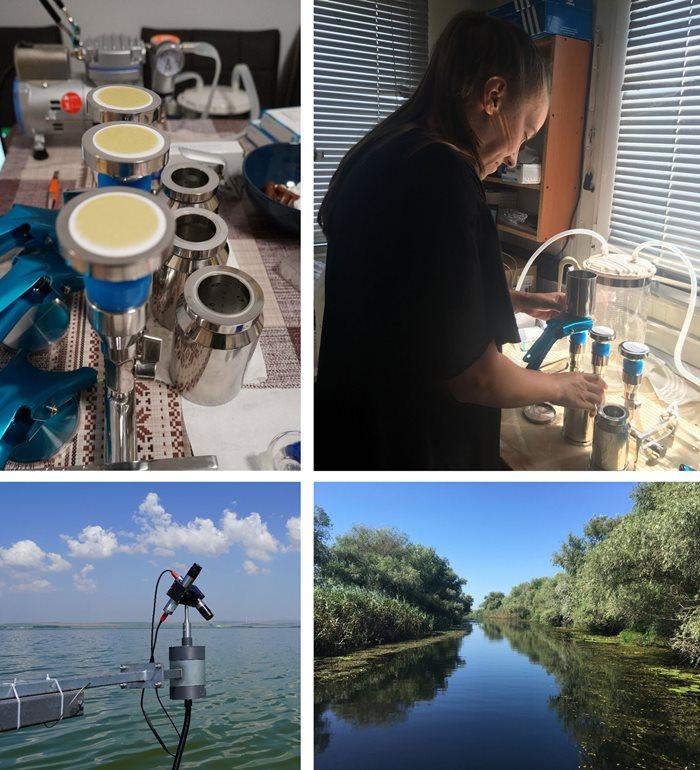
The European Union has unveiled a new portfolio of 17 research and innovation projects under the Horizon Europe programme, aimed at restoring aquatic ecosystems, reducing pollution and introducing innovative environmental technologies.
The total investment announced by the European Commission amounts to €119 million.
The projects were presented on 5 November 2026, while Romanian media published additional information on 8 November regarding the participation of organisations from the Danube–Black Sea region.
Of particular importance to the region are the BlueMissionDBS2030, DANUBINA and DANUBEAQUA projects.
Romania's National Institute for Research and Development on Marine Geology and Geo-ecology (GeoEcoMar) coordinates the BlueMissionDBS2030 project, with total grant funding of approximately €3.55 million.
The project aims to strengthen regional cooperation, support environmental innovation and mobilise investment in restoring aquatic ecosystems in the Danube and Black Sea region.
The DANUBINA project focuses on preventing pollution caused by plastic waste and microplastics in the Danube Basin and the Black Sea.
DANUBEAQUA aims to introduce renewable energy solutions and digital technologies into the aquaculture sector.
Overall, more than 340 organisations are involved in the new portfolio of European projects, including research institutions, public authorities, businesses and civil society organisations.
Commentary by the Institute of Danube Research
The expansion of European environmental restoration programmes reflects a gradual transition from isolated conservation measures towards integrated aquatic ecosystem management.
For the Danube Basin, the relationship between river water quality, the accumulation of pollutants, sediment transport and the ecological condition of the Black Sea is particularly significant.
The Danube Basin must be regarded as a single transboundary ecological system in which the consequences of activities in one country can extend to other states.
According to the Institute of Danube Research (IDR), Ukraine should strengthen its participation in European research consortia, particularly in pollution monitoring, wetland restoration, biodiversity conservation and the digitalisation of environmental observations.
Another priority should be the integration of Ukrainian research institutions, territorial communities and environmental organisations into joint projects with Romania, Moldova and other Danube countries.
Such cooperation will contribute not only to environmental restoration but also to the establishment of a long-term system of sustainable natural resource management in the Lower Danube region.
 Ukraine
 Romania

 Moldova
 Bulgaria
 Hungary
 Austria