

Bulgaria, Azerbaijan, Georgia and Türkiye to Develop a New Energy Corridor to the European Union
 Bulgaria
11.11.2026
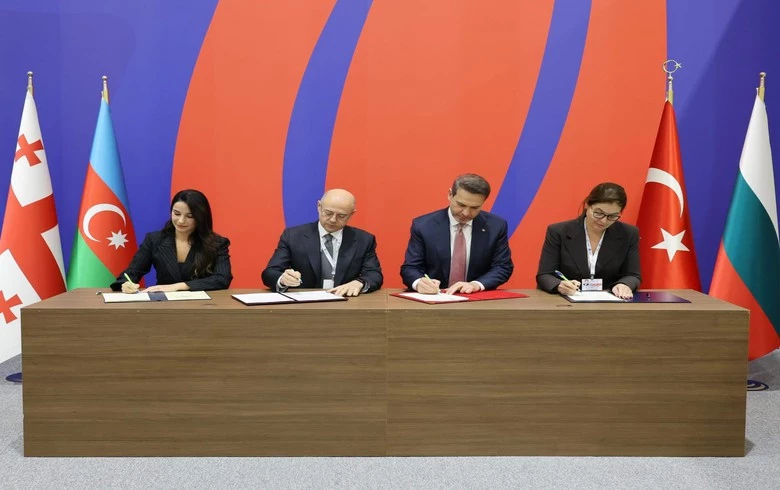
Bulgaria, Azerbaijan, Georgia and Türkiye have signed an intergovernmental agreement on a strategic partnership in clean energy, aimed at establishing a new cross-border corridor for electricity supplies from the Caspian region to European markets.
The agreement was signed on 10 November 2026 in Antalya, Türkiye, on the sidelines of the 31st United Nations Climate Change Conference (COP31).
The agreement focuses on developing the Azerbaijan–Georgia–Türkiye–Bulgaria energy corridor, diversifying electricity supply routes and strengthening the integration of the participating countries' power systems.
The partnership envisages the development of cross-border infrastructure, the construction and modernisation of electricity transmission lines, the establishment of technical and regulatory conditions for electricity trading, and the expansion of fibre-optic communications.
According to preliminary estimates, the prospective transmission capacity of the energy corridor could reach 2,000–3,000 MW. Implementation of the project is expected to involve national transmission system operators and the establishment of joint mechanisms for managing infrastructure investments.
The initiative builds on energy cooperation launched in 2024 and formalised through a memorandum in April 2025. Its implementation could strengthen Bulgaria's position as a major energy hub in Southeastern Europe and create new opportunities for importing electricity generated from renewable energy sources.
Commentary by the Institute of Danube Research
The development of a new energy corridor between the Caspian region and the European Union reflects the gradual emergence of a new energy supply architecture in Southeastern Europe, in which Black Sea and Danube countries are assuming an increasingly important role.
According to Vitaliy Barvinenko, Director of the Institute of Danube Research, this project should be viewed not merely as an infrastructure initiative but also as an important geoeconomic transformation of the Black Sea–Danube region. It represents a gradual transition from traditional patterns of energy dependence towards a diversified system of energy supply and transit, potentially reshaping the regional energy balance.
Bulgaria's participation is particularly significant, as it creates additional opportunities for the country to become integrated into transcontinental energy routes. Combined with the development of energy infrastructure in Romania and other Danube countries, this could lay the foundation for an interconnected network of cross-border energy corridors.
For Ukraine, these developments are of strategic importance. The establishment of new electricity supply routes from the Caspian region could contribute to the diversification of the European energy market and create additional opportunities for integrating Ukraine's power system through cross-border electricity interconnections.
In this context, the proposed Artsyz–Isaccea 400 kV electricity transmission line is particularly relevant. The project could strengthen electricity interconnections between Ukraine and Romania, improve the reliability of power supplies to Ukraine's southern regions, and expand opportunities for cross-border electricity trading.
At the same time, as Vitaliy Barvinenko emphasises, the significance of new energy corridors extends far beyond economic considerations. They directly influence the geopolitical balance, energy security and strategic autonomy of European countries. Ukraine should therefore not simply adapt to Europe's emerging energy architecture but actively participate in shaping it.
The Institute of Danube Research believes that strengthening energy cooperation in the Black Sea–Danube region should become one of the priorities of Ukraine's economic and regional diplomacy. The combination of new transcontinental routes, modernised cross-border electricity interconnections and deeper integration into the European energy market could enhance Ukraine's energy resilience and establish the Danube region as an important pillar of European energy security.

 Ukraine
 Romania

 Moldova
 Hungary

 Austria

 Danube