

Ukraine considers creating a single Danube administration: what it could mean for ports, logistics and regional recovery
 Ukraine
06.05.2026
Ukraine
06.05.2026

Ukraine increasingly views the Danube region not merely as a temporary alternative to maritime routes under wartime conditions, but as a separate strategic logistics and industrial area integrated with European Union markets. In this context, the idea of establishing a full-fledged Danube cluster and a single administration capable of coordinating port, railway, road, industrial and service infrastructure is gaining particular importance.
The issue was discussed during a working meeting between Andrii Kashuba, Deputy Minister for Communities and Territories Development of Ukraine, and World Bank representative Antonio Nunez. The Ukrainian side focused on the development of the Danube region as one of the key directions for strengthening the country’s transport resilience. The proposed concept includes the formation of a Danube cluster, tariff incentives, support for the national fleet, the development of industrial parks and the strengthening of port infrastructure resilience.
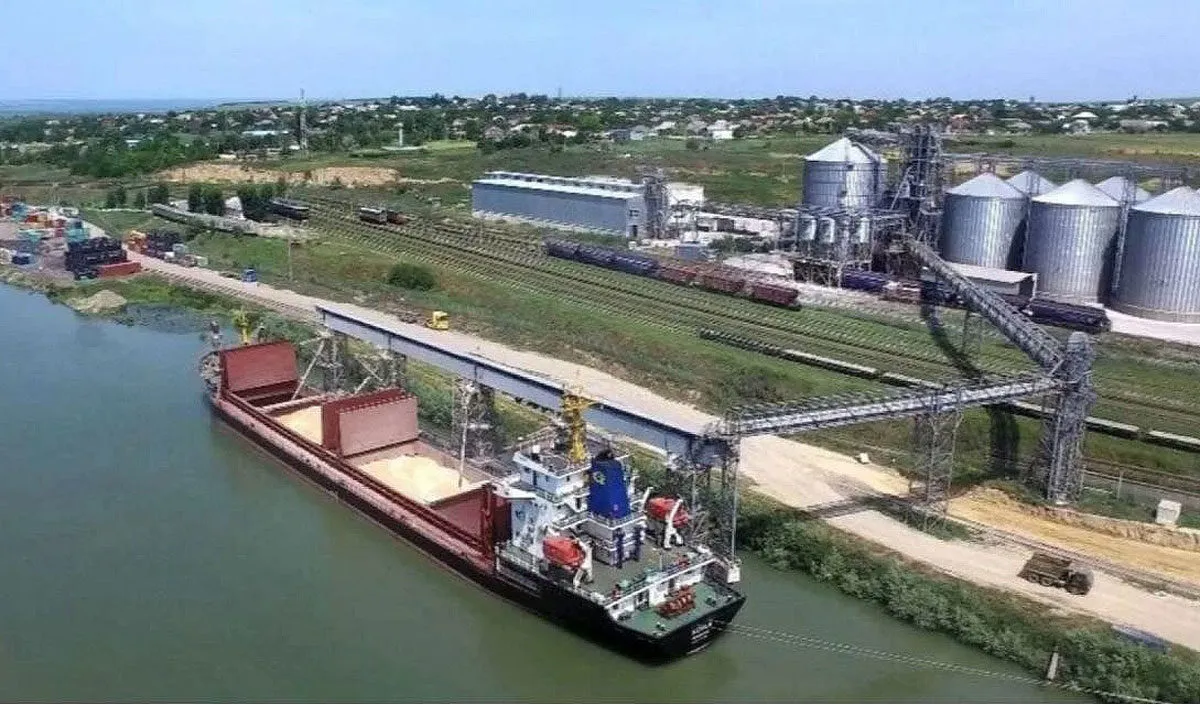
Since the beginning of Russia’s full-scale invasion, Ukraine’s Danube ports — Izmail, Reni and Ust-Dunaisk — have become a critically important component of the country’s foreign trade logistics. However, the further development of this route requires a transition from emergency response to a long-term governance model.
The issue is not limited to increasing cargo transshipment volumes. It concerns the creation of an integrated territorial and economic system in which ports, railways, road corridors, border infrastructure, inland navigation, industrial parks and production sites operate as a single functional mechanism.
This is why the idea of a single Danube administration is of strategic significance. Such an institution could become an instrument for coordinating investments, tariff policy, infrastructure development, cooperation with international financial institutions, and the alignment of interests between the state, local communities, port operators and businesses.
At present, the development of Ukraine’s Danube region depends on the coordinated actions of multiple actors: central executive authorities, port administrations, customs and border services, local communities, railway and road operators, international partners and private investors.
Without a single coordination centre, there is a risk of fragmented decision-making: ports are modernised separately, roads separately, railway access routes separately, and border crossing points separately. Such an approach does not allow Ukraine to fully develop a competitive Danube logistics belt.
A single administration could perform not a duplicative but an integrative function. It could provide strategic planning for the entire Danube region as a functional transport and industrial area. In practical terms, this would mean coordinating infrastructure projects, preparing investment packages, aligning tariff incentives, supporting navigation and developing specialised industrial zones near logistics hubs.
Draft law No. 14344 was also discussed as part of the meeting. It was registered in the Verkhovna Rada on 30 December 2025 as a European integration draft law concerning merchant shipping and navigation on inland waterways. The document was submitted by the Cabinet of Ministers of Ukraine and included on the parliamentary agenda on 10 February 2026.
According to the Ministry for Communities and Territories Development, the draft law is aimed at a comprehensive renewal of the navigation safety management system, the division of powers between institutions, the alignment of Ukrainian regulation with international standards and EU law, and the strengthening of port security in wartime conditions.
For the Danube region, this has particular importance. Inland waterways and Danube ports effectively serve as Ukraine’s strategic transport reserve. Therefore, the adaptation of Ukrainian legislation to European standards creates preconditions not only for safer navigation, but also for deeper integration of Ukraine’s Danube logistics into the EU transport system.
IDR comment
For Odesa Oblast and the communities of Ukraine’s Danube region, the proposed concept may have a systemic effect. If the Danube cluster develops not only as a port-based model but as a comprehensive economic area, it may open new opportunities for job creation, processing industries, investment in industrial sites, and the modernisation of roads, railway access routes and border services.
At the same time, such a model requires a clear balance between national priorities and local development interests. Danube communities should not remain merely territories where infrastructure is located. They must become full participants in planning processes, since it is at the local level that the social, environmental, land-use, labour and investment consequences of logistics growth are concentrated.
According to Vitalii Barvinenko, Director of the Institute of Danube Research, the idea of creating a single Danube administration may become one of the key governance decisions for Ukraine’s transition from crisis logistics to the long-term development of its Danube region.
“The Ukrainian Danube has already proven its strategic role for the state. But the next stage is not simply about increasing cargo flows; it is about creating an integrated model for regional development. A single Danube administration could become an institutional mechanism that connects ports, roads, railways, navigation, industrial sites and the interests of communities within a common strategy,” Vitalii Barvinenko noted.
He emphasised that the future model should not be reduced to administrative management of ports alone.
“The Danube cluster should be viewed more broadly — as a space for Ukraine’s economic integration with the European Union. This requires not only infrastructure projects, but also tariff incentives, the development of the national fleet, industrial parks, transparent cooperation with international financial institutions and the participation of local communities in decision-making,” the Director of IDR stressed.
The Institute of Danube Research believes that, provided there is proper legislative and institutional design, the Danube region can evolve from a wartime reserve logistics route into one of the key centres of Ukraine’s post-war economic recovery and practical integration into the European transport area.
 Moldova

 Serbia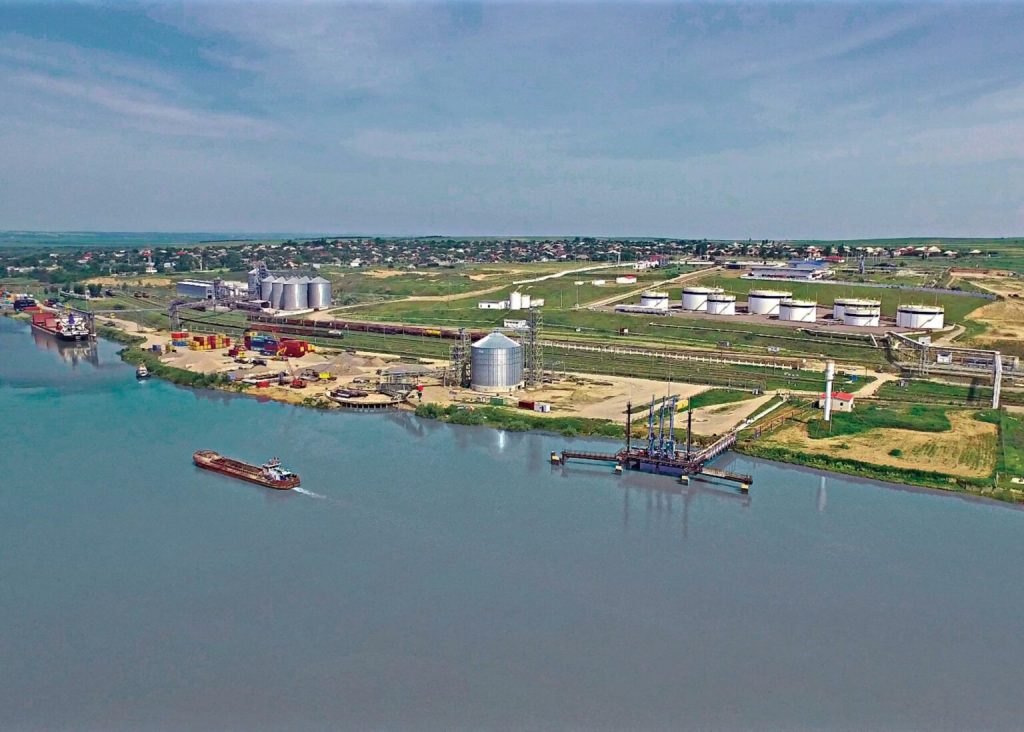
 Bulgaria
 Hungary
 Romania



 Danube