

UNCTAD Supports Moldova’s Customs Service in Implementing IT Solutions for Postal Shipments
 Moldova
19.05.2026
Moldova
19.05.2026
The Customs Service of the Republic of Moldova, with the support of the United Nations Conference on Trade and Development — UNCTAD — is developing modern IT solutions for processing international postal shipments. The process involves express delivery companies, the state enterprise Poșta Moldovei, as well as UNCTAD experts engaged in the modernisation of Moldova’s customs information system.
The initiative concerns the further development of digital tools within the ASYCUDA World platform, which is used by Moldova’s Customs Service to automate customs procedures. The new solutions are expected to simplify and optimise the processing of international postal shipments, ensure electronic data exchange with customs authorities, and increase the transparency and predictability of customs processes.
As part of the preparatory stage, the Customs Service organised online information sessions with the participation of businesses, postal operators and international experts. During these sessions, UNCTAD representatives presented modules and IT solutions that have already been developed and implemented in several European countries for managing postal flows and e-commerce operations.
Particular attention is being paid to adapting the new digital solutions to Moldova’s national needs. To this end, the Customs Service is expected to define operational processes and workflows specific to the postal sector, which will then be submitted to UNCTAD experts for further technical development.
Deputy Director of the Customs Service Carolina Gargaun emphasised the importance of continuous dialogue between customs authorities and the business community. According to her, the development of modern and efficient information systems requires a participatory approach and constant cooperation with all actors in the logistics and trade chain.
In the next stages, postal service operators will have the opportunity to participate in testing and adapting the new processes and functions. Their practical input and feedback should help identify additional solutions for optimisation and improvement.
The modernisation of customs IT systems is part of Moldova’s broader integration into the European customs area. In particular, Moldova is moving towards compatibility with European customs instruments, including the development of digital transit procedures and data exchange mechanisms.
Comment by the Institute of Danube Research
According to the experts of the Institute of Danube Research, the digitalisation of customs clearance for postal shipments in Moldova is significant not only for internal administrative modernisation, but also for the broader transformation of the region’s trade and logistics infrastructure.
For Moldova, this is an element of practical European integration. The compatibility of customs information systems with European approaches creates preconditions for reducing administrative barriers, shortening goods clearance times, and strengthening trust between the state, businesses and international partners.
Such solutions also have regional importance for the entire space between the Danube, the Black Sea, Romania, Moldova and Ukraine. In the current context, customs digitalisation is becoming part of the resilience of logistics corridors: it makes it possible to manage cargo flows more effectively, reduce pressure on border crossing points and improve the predictability of cross-border trade.
For Ukraine, this experience is also indicative. In the context of the development of the Danube Region, integration with the EU market and the modernisation of border infrastructure, not only physical logistics — roads, ports and border crossing points — but also the digital infrastructure of customs administration is gaining special importance. It is precisely the combination of transport, customs and information interoperability that forms the foundation of modern European trade corridors.
The Institute of Danube Research believes that Moldova’s implementation of new IT solutions with UNCTAD support may become an important step towards the formation of a more integrated, transparent and technologically compatible customs and logistics space in the Lower Danube region.


 Ukraine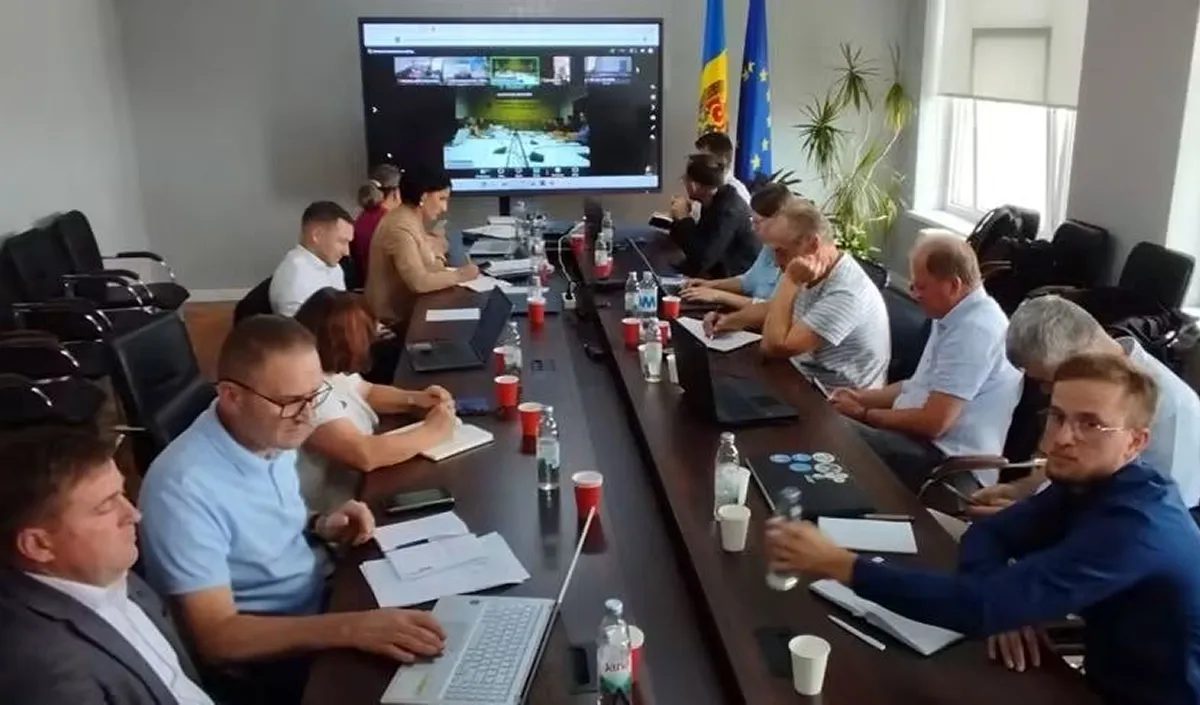

 Serbia

 Bulgaria
 Hungary
 Romania



 Danube