

Greenpeace Romania Warns of a Possible Fluid Spill Near the Neptun Deep Offshore Drilling Area
 Romania
21.05.2026
Romania
21.05.2026
The Romanian office of the international environmental organization Greenpeace has reported a possible fluid spill in the area of the Neptun Deep gas project in the Black Sea. According to the organization, satellite images dated 10 March 2026 detected a slick in the Domino perimeter — a deep-water area where offshore operations are being carried out as part of the Neptun Deep project. Greenpeace estimates that the slick stretched for approximately 100 km and covered about 45 km², which the organization compares to more than 6,000 football fields.
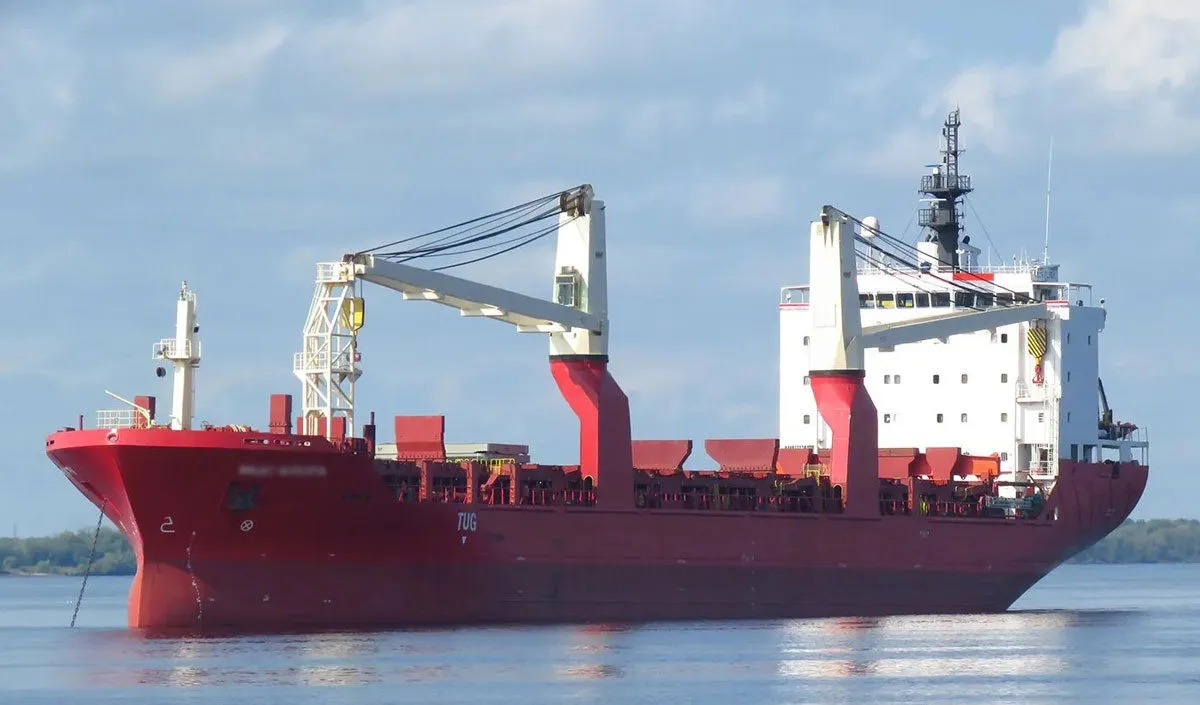
According to Greenpeace Romania, the potential source of the discharge may have been the vessel Skandi Asserter, which services the Transocean Barents drilling platform. The organization notes that the vessel’s route partially overlapped with the trace of the substance detected by satellite monitoring. At the same time, this remains a preliminary environmental assessment that requires a full official investigation by the competent authorities.
Greenpeace also stated that the Romanian Naval Authority had received an alert through the CleanSeaNet monitoring system but did not send a team to sea to investigate the case, as the incident was considered “operationally irrelevant” due to its considerable distance from the shore. According to the organization, the slick was identified using Copernicus/Sentinel-1 radar satellites, processed by the Cerulean artificial intelligence system, and additionally verified by experts in oceanographic analysis.
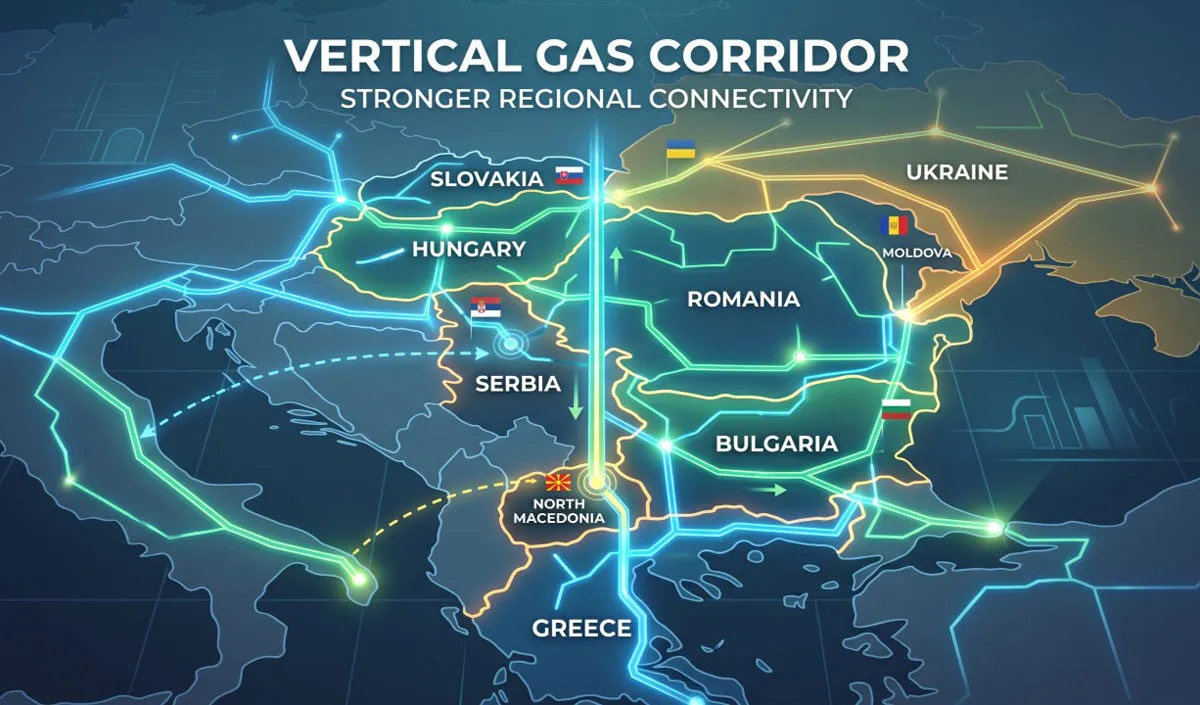
The situation around Neptun Deep is particularly significant because the project is one of Romania’s and the wider Black Sea region’s key energy projects. It is being developed by OMV Petrom and Romgaz. The project is estimated at around EUR 4 billion, involves the development of approximately 100 billion cubic metres of recoverable gas reserves, and is expected to start commercial production in 2027. Neptun Deep is expected to double Romania’s gas production and turn the country into a net gas exporter.
At the same time, this incident once again raises the issue of environmental control over offshore operations in the Black Sea. Greenpeace Romania says that between 2022 and 2025 it identified 226 pollution slicks in the Romanian sector of the Black Sea and has called on the companies behind Neptun Deep to strengthen responsibility for subcontractor vessels and improve the monitoring system for offshore operations.
Comment by the Institute of Danube Research
The Institute of Danube Research considers Greenpeace Romania’s report on a possible spill near Neptun Deep as a test of the capacity of state institutions to ensure proper oversight of strategic energy projects in the Black Sea.
Neptun Deep is clearly important for the energy security of Romania, Moldova, Ukraine and Central and Eastern Europe. Against the background of Europe’s move away from Russian energy resources, Romanian offshore gas is becoming an important source of regional stability. However, energy security cannot be considered separately from environmental security.
The Black Sea is not only an energy space. It is a complex ecosystem, a transport corridor, a fishing and recreation area, a naval security zone and an area of economic interaction among coastal states. Any incidents related to offshore drilling should be assessed not according to whether pollution has reached tourist beaches, but according to the principle of systemic risk to the marine environment.
For the Danube–Black Sea region, this issue has direct significance. The Danube Delta, the Ukrainian Danube region, the Romanian coast, seaports, protected areas and logistics routes form a single space of ecological interdependence. Therefore, pollution in one sector of the Black Sea may potentially affect the entire regional policy agenda in the fields of security, transport, environment and cross-border cooperation.
IDR experts believe that the principle of enhanced transparency should apply to projects of this scale. If satellite data indicate a possible spill, the response of the state and companies must not be formal. It should be procedurally clear: rapid verification, public communication, identification of the source, assessment of environmental consequences and, where necessary, accountability for those responsible.
It is especially important to strengthen the system of independent monitoring in the Black Sea. Satellite data, automated pollution detection systems, maritime inspections, open environmental registers and cross-border information exchange should become mandatory elements of offshore project governance.
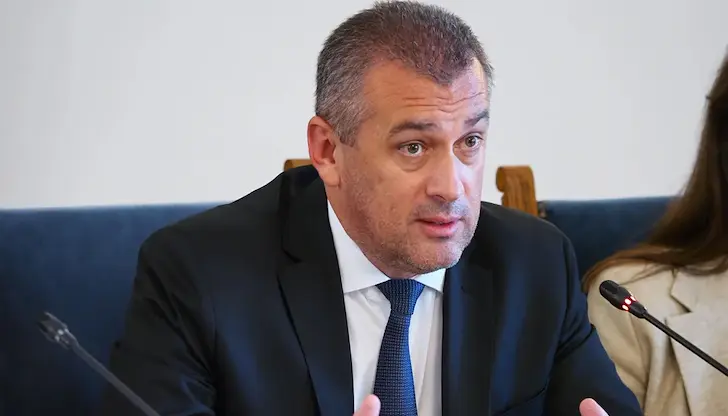
Comment by Vitaliy Barvinenko, Director of the Institute of Danube Research
“The Neptun Deep project is strategic for Romania and for the entire regional energy security system. But the strategic status of a project cannot mean lower environmental standards or weaker oversight. On the contrary, the larger the scale of the project, the higher the requirements for transparency, monitoring and operator responsibility must be.”
According to Vitaliy Barvinenko, Greenpeace Romania’s report demonstrates that the Black Sea needs a new culture of environmental governance.
“We are not dealing with a local problem of one platform or one vessel. This concerns the overall model of managing the maritime space. If pollution is detected by satellites but is not checked on site simply because it is far from the shore, this creates a dangerous precedent. The Black Sea does not begin at the beach and does not end near tourist areas. It is a shared ecosystem on which Romania, Ukraine, Moldova and the entire Danube region depend.”
Vitaliy Barvinenko also emphasized that this case has practical significance for Ukraine.
“The Ukrainian Danube region and the Ukrainian sector of the Black Sea must carefully analyse such situations. In the post-war period, Ukraine will also return to major infrastructure, energy and port projects. It is already necessary to shape an approach in which economic development is not opposed to environmental security, but relies on it as one of the conditions for investor and public trust.”
For the Danube–Black Sea area, the main conclusion is clear: large energy projects of the future must develop according to the principle of “security plus responsibility.” This model can ensure long-term regional resilience, public trust and real integration into European governance standards.
 Moldova
 Ukraine

 Serbia
 Bulgaria
 Hungary


 Danube