

Romanian Transelectrica Records Additional Revenues from Emergency Energy Assistance to Ukraine and Moldova
 Romania
29.05.2026
Romania
29.05.2026
Romania’s national electricity transmission system operator Transelectrica ended the first quarter of 2026 with growth in its main financial indicators. According to the report submitted to the Bucharest Stock Exchange, the company’s operating revenues in January–March 2026 reached RON 1.613 billion, up 14% compared with the same period of 2025. Net profit increased by 27%, reaching RON 201 million.
One of the additional sources of revenue was income from so-called emergency assistance provided to the power systems of neighbouring countries. Transelectrica’s report states that in the first quarter of 2026, revenues from such assistance amounted to RON 13.4 million, compared with only around RON 0.3 million in the same period of 2025. Thus, the increase under this item amounted to approximately RON 13 million.
According to the company, in January–March 2026 emergency energy assistance was provided at the request of transmission system operators from neighbouring countries: to Ukraine in January and March, to the Republic of Moldova in January and February, and to Serbia in January. The purpose was to ensure electricity supplies needed to cover domestic consumption in these countries amid the ongoing war on the territory of Ukraine and emergency shutdowns of power units in neighbouring states.
This indicator reflects the dual nature of regional energy cooperation. On the one hand, Romania is increasingly acting as an important element of energy stability for Ukraine, Moldova and the wider South-Eastern European region. On the other hand, crisis situations in the energy systems of neighbouring countries generate additional commercial revenues for the Romanian operator, which are reflected in the company’s financial statements.
For Ukraine, this fact has not only financial but also strategic significance. Emergency assistance from neighbouring energy systems remains an important instrument for supporting resilience amid Russian attacks on energy infrastructure. At the same time, dependence on emergency imports underlines the need for further development of domestic generation, energy storage systems, cross-border interconnectors and more flexible mechanisms for balancing the power system.
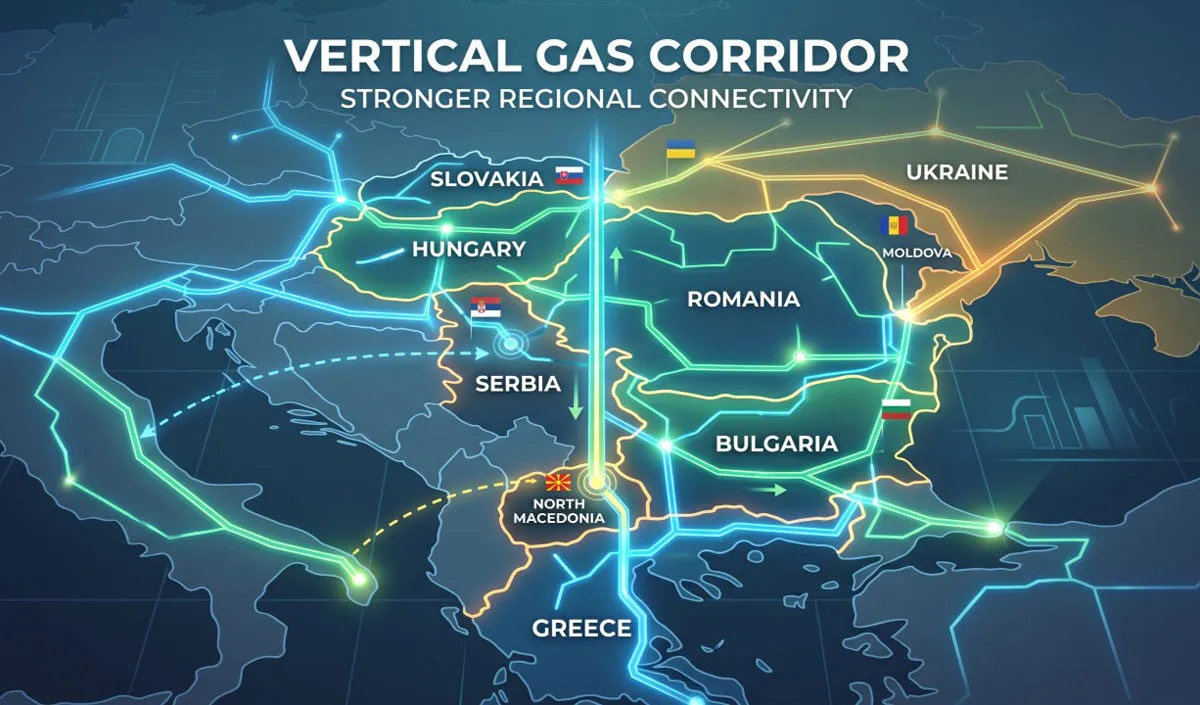
Particular attention should be paid to the Ukrainian-Romanian-Moldovan energy triangle. Romania is already becoming one of the key nodes of regional energy security — both through electricity interconnections and in the broader context of gas, transport and port infrastructure development. For Moldova and Ukraine, this creates additional opportunities, but also requires a transition from situational emergency assistance to long-term rules of regional energy solidarity.
IDR comment
The Institute of Danube Research notes that Transelectrica’s financial results are indicative of a new reality in Eastern Europe: energy security is increasingly becoming not only a matter of technical cooperation, but also a field of regional policy, economics and infrastructure resilience.
“Emergency assistance to Ukraine and Moldova from Romania is an important manifestation of energy interdependence in the region. However, the very fact that such operations are becoming a visible revenue item for a national operator shows that crisis energy management has already become part of the economy of war and instability. For Ukraine, the key task is not to reject external assistance, but to reduce emergency dependence through investments in resilience, decentralised generation, energy storage and new interconnectors with the EU,” the Institute notes.
According to IDR, the situation surrounding Transelectrica should not be viewed as an isolated financial episode, but as a signal for regional policy. Ukraine, Moldova and Romania need not only technical electricity exchanges during crises, but also a common architecture of energy resilience — with coordinated rules for emergency assistance, transparent tariff mechanisms, development of cross-border infrastructure and deeper integration into the European energy market.
For the Danube region, this issue is of particular importance. The region is gradually becoming a space where energy, logistics, security and humanitarian challenges intersect. Therefore, Ukraine’s energy cooperation with Romania and Moldova should be considered part of a broader strategy of regional resilience — alongside the development of ports, transport corridors, border infrastructure and crisis response mechanisms.
IDR conclusion: Transelectrica’s revenues from emergency assistance to neighbouring countries show that the energy vulnerability of Ukraine and Moldova already has a concrete economic dimension for the regional market. At the same time, this situation confirms Romania’s strategic role as an energy partner and the need for Ukraine to accelerate the transition from emergency response to systemic energy resilience.
 Moldova
 Ukraine
 Serbia
 Bulgaria
 Hungary



 Danube