

Danube Water Forum 2026 in Sofia: water resilience becomes a key agenda for the Danube Region
 Bulgaria
20.05.2026
Bulgaria
20.05.2026
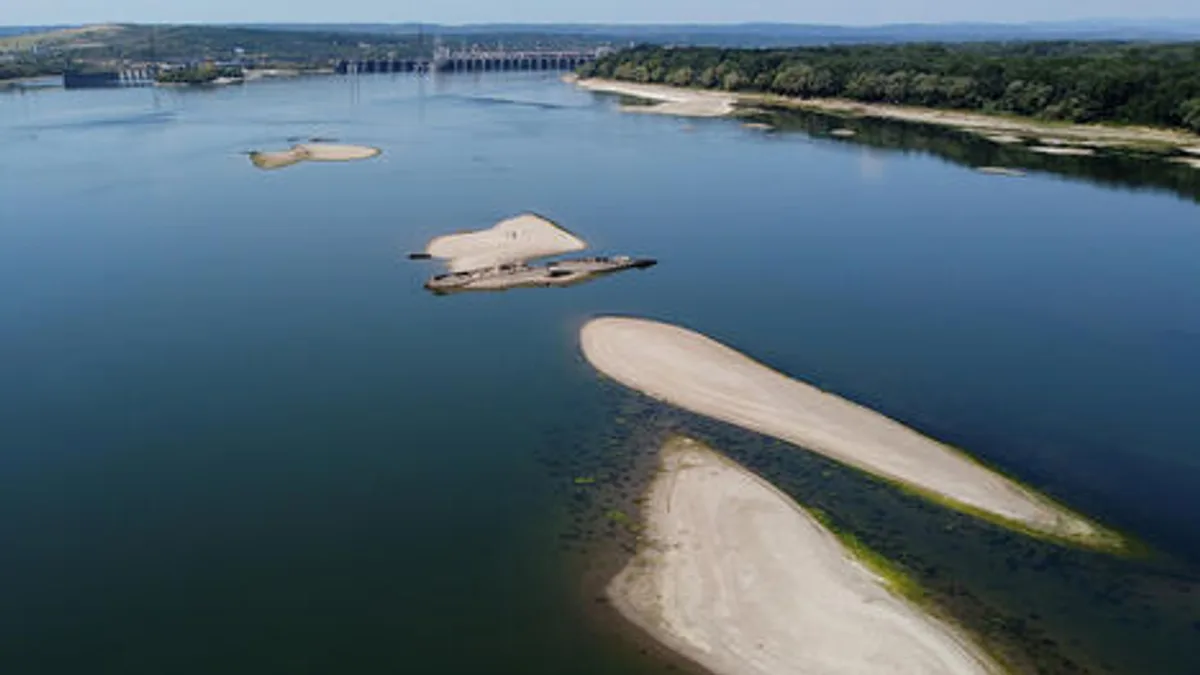
From 20 to 22 May 2026, Sofia, Bulgaria, hosts the Danube Water Forum 2026 under the title “From Vision to Action: Building a Water-Resilient Danube Region.” The event is organised by IAWD — the International Association of Water Service Companies in the Danube River Catchment Area within the framework of the Danube Water Program, jointly implemented by IAWD and the World Bank, with co-financing from the Government of Austria. The local hosts are IAWD members — the Bulgarian Water Association and Sofiyska Voda.
The Forum takes place at the municipal cultural centre Toplocentrala in Sofia and brings together more than 150 stakeholders, including representatives of water and wastewater utilities, international organisations, expert communities, public authorities and partner institutions.
The central focus of the Forum is the transition from strategic vision to practical action in strengthening water resilience. Particular attention is given to the implications of the new priorities of the EU Water Resilience Strategy for water and wastewater utilities across the Danube Region.
The programme addresses key technical areas that are increasingly shaping the resilience of the sector: smart asset management, improved water efficiency, effective and resource-efficient wastewater treatment, innovation in utility operations, workforce development, stronger utility partnerships and leadership capable of preparing water services for future challenges.
For the Danube Region, this agenda has significance beyond the water sector alone. Water infrastructure is increasingly viewed as a component of territorial resilience, environmental security, quality of life in communities and the ability of regions to adapt to long-term climate change.
The Forum is also taking place in a politically important year for the macro-region. In 2026, Bulgaria holds the Presidency of the EU Strategy for the Danube Region for the second time, from 1 January to 31 December 2026. The Bulgarian Presidency is focused on reducing economic, social and territorial disparities in the Danube Region, strengthening cooperation, political dialogue and strategic alignment, as well as ensuring closer links between the EUSDR and EU cohesion policy.
IDR commentary
According to experts of the Institute of Danube Research, the Danube Water Forum 2026 is an important signal for the entire system of regional governance in the Danube basin. Water is gradually moving beyond a purely municipal or environmental issue and becoming a matter of strategic infrastructure, on which community resilience, economic security, cross-border cooperation and the quality of spatial development increasingly depend.
For Ukraine, this agenda is particularly relevant. The Ukrainian Danube region is simultaneously a borderland, a port and logistics area, an agricultural territory, an environmentally sensitive zone and a region exposed to wartime risks. Therefore, water resilience cannot be limited only to the modernisation of utilities or wastewater treatment. It should be considered more broadly — as an element of community security, climate adaptation, protection of Danube aquatic ecosystems and Ukraine’s integration into the European water governance space.
The most relevant issues for Ukrainian communities include effective management of water infrastructure, reduction of water losses, digital monitoring, professional training and the development of inter-municipal cooperation. In many communities, the lack of institutional capacity, investment resources and technical expertise remains the main obstacle to moving from declarations to real projects.
IDR believes that the experience and agenda of the Danube Water Forum should be used to shape a dedicated Ukrainian water resilience agenda for the Lower Danube. Such an agenda should combine the modernisation of water and wastewater utilities, environmental monitoring, protection of wetlands, cross-border cooperation with Romania and Moldova, and the mobilisation of EU, World Bank and Danube Strategy instruments.
In this context, Bulgaria’s 2026 Presidency of the EUSDR opens an additional political window of opportunity. For Ukraine, it is important to more actively promote the interests of Lower Danube communities within the macro-regional dialogue — not only as a territory of logistics and border infrastructure, but also as a space of water, environmental and social resilience.
 Moldova
 Ukraine

 Serbia
 Hungary
 Romania

 Danube