

Serbia awards contract for oil pipeline section linking the country with Hungary: a new energy corridor strengthens the Balkans’ role in regional supply security
 Serbia
19.05.2026
Serbia
19.05.2026
Serbian state-owned oil pipeline operator Transnafta has awarded a contract for the construction of a 113-kilometre section of a future oil pipeline that will connect Serbia with Hungary. The project will be implemented by a consortium of Serbian companies led by MVM Juzna Backa, an energy infrastructure developer based in Novi Sad.
The contract is valued at 14.5 billion Serbian dinars excluding VAT and 17.4 billion dinars including VAT, equivalent to approximately EUR 124 million excluding VAT. The project covers the construction of a section from Horgoš, on the border with Hungary, to Transnafta’s oil terminal in Novi Sad.
The planned capacity of the pipeline is around 5.5 million tonnes of crude oil per year. In the longer term, the infrastructure is expected to become part of a wider route of more than 300 kilometres, connecting Novi Sad with the receiving station of the Druzhba oil pipeline in Százhalombatta, Hungary.
For Serbia, the project is of strategic importance, as the country currently receives crude oil mainly through the Croatian JANAF system. The new route via Hungary is viewed in Belgrade as a tool for diversifying supply and reducing dependence on a single transport direction.
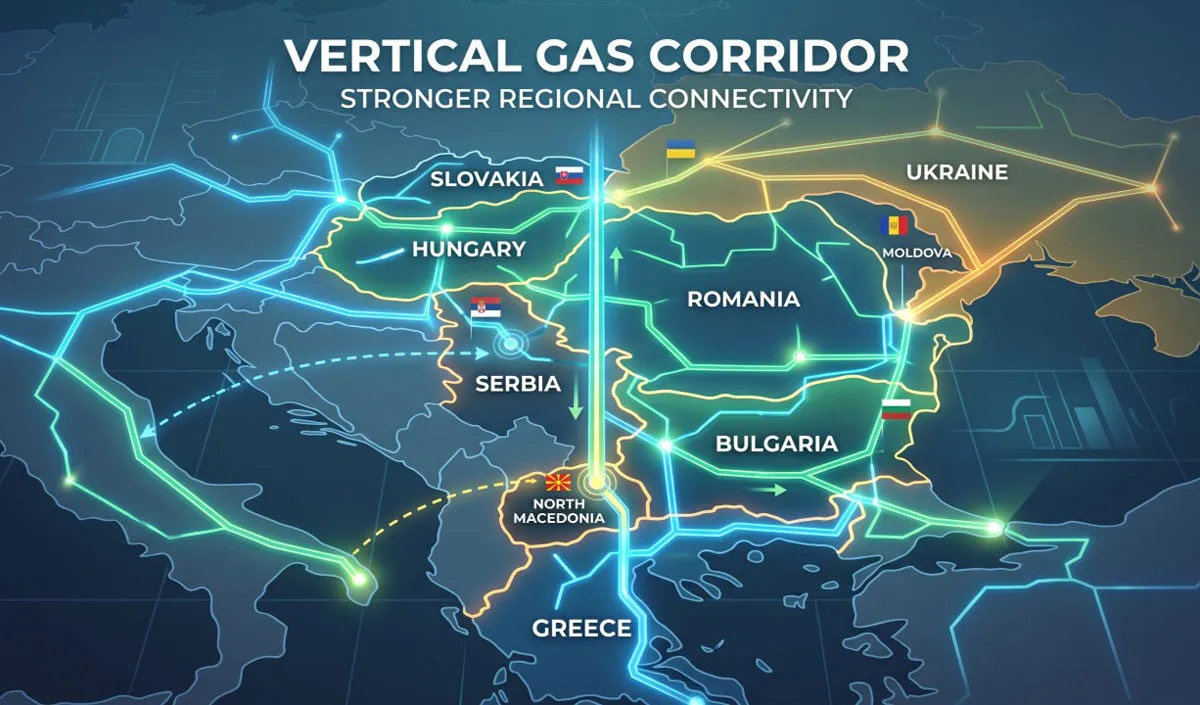
At the regional level, the project is also linked to a broader discussion about the role of the Druzhba pipeline, the Adriatic route, and the energy policies of Hungary and Serbia. This confirms that oil logistics in Central and South-Eastern Europe are increasingly moving beyond the purely commercial sphere and becoming an element of energy security, geopolitical resilience and control over critical infrastructure.
IDR comment
According to experts of the Institute of Danube Research, the contract for the construction of the Serbian section of the oil pipeline to Hungary should be considered not only as a bilateral infrastructure project, but also as part of a deeper transformation of the energy geography of Central, Eastern and South-Eastern Europe.
“Serbia is effectively developing an alternative northern energy corridor aimed at reducing its dependence on the Croatian supply route. For the Balkans, this means stronger competition between routes, operators and national energy strategies. For Ukraine, it is important to closely analyse these processes, as they influence the balance of infrastructure flows across the wider Danube–Black Sea region,” IDR experts note.
The Institute of Danube Research emphasises that the new Serbia–Hungary oil pipeline may strengthen Hungary’s role as an energy hub for the Balkans. At the same time, it creates an additional channel for Serbia’s integration with infrastructure linked to the Druzhba pipeline, which remains politically sensitive in the context of Europe’s policy to reduce dependence on Russian energy resources.
For Ukraine, this case offers at least three practical conclusions.
First, countries in the region are actively investing in backup and alternative supply routes, treating pipeline, port, railway and river infrastructure as a single resilience system.
Second, energy security increasingly depends not only on access to resources, but also on control over routes, the technical capacity of operators and the political predictability of transit states.
Third, for Ukraine’s Danube region, it is important to develop its own logistics and energy role in the wider space between the Black Sea, the Balkans, Romania, Moldova and Central Europe. Therefore, the modernisation of Danube ports, border crossings, railway approaches and multimodal routes should be viewed not as a local infrastructure policy, but as an element of Ukraine’s national security and European integration.
IDR conclusion: the Serbia–Hungary oil pipeline demonstrates that the states of the Danube–Balkan area are moving towards a model of infrastructure insurance — the creation of parallel routes that reduce dependence on a single supplier or transit direction. For Ukraine, this is an additional argument in favour of accelerating the development of its own strategy for a Danube logistics and energy corridor.
 Moldova
 Ukraine
 Bulgaria
 Hungary
 Romania

 Danube