

The Danube is key to Ukraine’s trade and economic recovery, unlocking regional growth potential
 Danube
22.05.2026
Danube
22.05.2026
The Danube route is increasingly being viewed not merely as a temporary logistics alternative under wartime conditions, but as a strategic economic corridor for Ukraine’s post-war recovery and the development of the Lower Danube region.
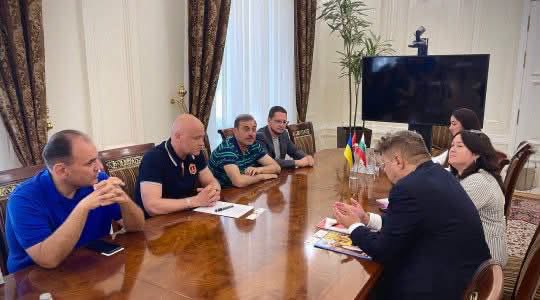
Manfred Seitz, Director-General of the Secretariat of the Danube Commission, took part in the Annual Summit of the International Transport Forum, held on the occasion of its 20th anniversary. On the margins of the Summit, he participated in the workshop “Practical Ways for the Recovery and Modernisation of Ukraine’s Transport Sector”, which focused on supporting Ukraine’s urgent transport-related material needs, as well as providing analytical support for the long-term restoration of Ukraine’s transport connectivity.
The discussion addressed the coordination of urgent recovery needs, including priorities for inland waterway, land, aviation and other transport routes. For Ukraine, this is of fundamental importance, as the transport system today performs not only an economic function, but also a security function: it supports exports, imports, humanitarian logistics, industrial supply chains and regional resilience.
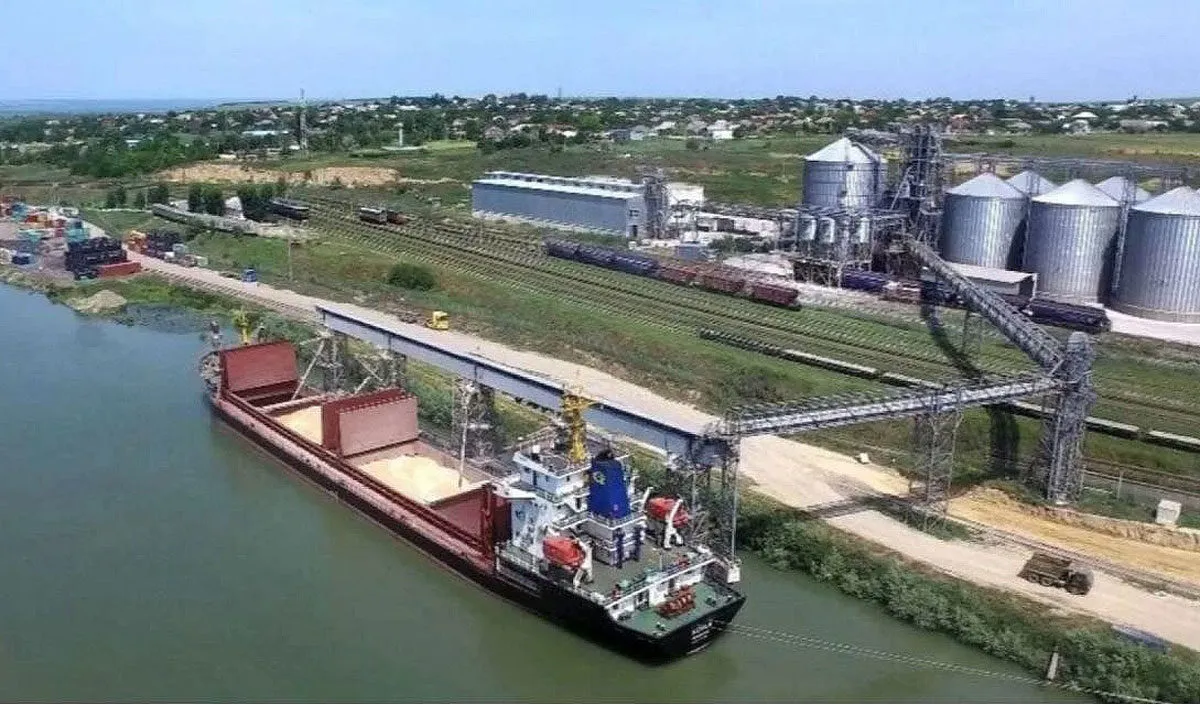
In his speech, Manfred Seitz presented the activities of the Danube Commission within the framework of the Danube Solidarity Lane and highlighted the publication of the Register of Damage caused by Russian military actions in the Lower Danube region. In the current security context, the Danube and its ports have proved essential for Ukraine’s exports and imports. At the same time, their importance goes beyond crisis logistics: they are becoming a long-term foundation for Ukraine’s economic recovery, stronger cross-border cooperation and a new regional growth space.
Special attention was given to the prospect of creating an integrated, sustainable and strategically important economic corridor on the Danube. One such idea is the Lower Danube Cross-Border Economic Development Zone, covering Ukraine, Romania and Moldova, as well as a network of port locations. In this model, the Lower Danube could become not a peripheral transport area, but a structured EU-linked growth corridor.
This concept has several dimensions. For Ukraine, it could become an instrument of post-war economic reconstruction. For Moldova, it could serve as a mechanism of pre-accession convergence with the European Union. For Romania and the wider Danube region, it could become a tool for regional development, infrastructure coordination and industrial cooperation.
Another important idea is the transformation of the current Danube Solidarity Lane into Europe’s first fully digital transport corridor for seamless cross-border movement between the EU, Ukraine and the Republic of Moldova. Such a corridor could become a central element of a targeted cross-border development strategy for the Lower Danube region.
IDR Commentary
The Institute of Danube Research views the statement by the Director-General of the Secretariat of the Danube Commission as an important signal: the Danube is gradually moving from the category of a crisis route to the category of a long-term infrastructure and economic strategy for Ukraine and the entire Lower Danube region.
For Ukraine, it is essential that Danube logistics should not remain only a response to the blockade or destruction of traditional transport routes. It should be institutionalised as a separate direction of national and intergovernmental policy, combining ports, railways, road corridors, customs procedures, digital services, industrial sites and regional development.
The concept of the Lower Danube Cross-Border Economic Development Zone is particularly promising, as it allows the transition from the logic of “cargo transit” to the logic of “value creation”. For the Ukrainian Danube region, this means the potential for new production and logistics chains, investment attraction, the development of port services, warehousing infrastructure, processing, repair facilities, energy and related sectors.
The digital dimension is equally important. If the Danube Solidarity Lane is transformed into a fully digital transport corridor, it could significantly reduce cross-border delays, improve logistics transparency, simplify customs administration and strengthen the integration of the Ukrainian ports of Izmail, Reni and Ust-Dunaisk into the European transport system.
At the same time, this scenario requires not only international support, but also a clear Ukrainian governance position. Ukraine needs a coordinated strategy for the development of the Danube port cluster, investment in railway and road approaches, digitalisation of port and customs procedures, tariff incentives and systematic coordination between central government, the region, local communities, port operators and international partners.
Comment by Vitaliy Barvinenko, Director of the Institute of Danube Research:
“Today, the Danube is not only a route for Ukraine’s exports or imports. It is a space where a new model of the country’s economic resilience can be formed. When we speak about post-war recovery, we must think not in terms of individual ports or individual shipments, but in terms of an integrated Danube development corridor.
The idea of a Lower Danube Cross-Border Economic Development Zone is extremely important for Ukraine. It makes it possible to combine the interests of the Ukrainian Danube region, Romania, Moldova and the European Union in one practical format. This could be not just a logistics route, but a space for industrial cooperation, investment, digital solutions and a new regional policy.
It is fundamentally important for us that Ukraine’s Danube ports should not be a periphery of the transport system, but a full-fledged gateway for Ukraine into European economic corridors. That is why the development of Izmail, Reni, Ust-Dunaisk, border infrastructure and neighbouring communities should be seen as part of Ukraine’s broader recovery strategy.
The Danube has already proved its role during the war. The task now is to turn this role into Ukraine’s long-term advantage in peacetime.”
 Moldova
 Ukraine
 Serbia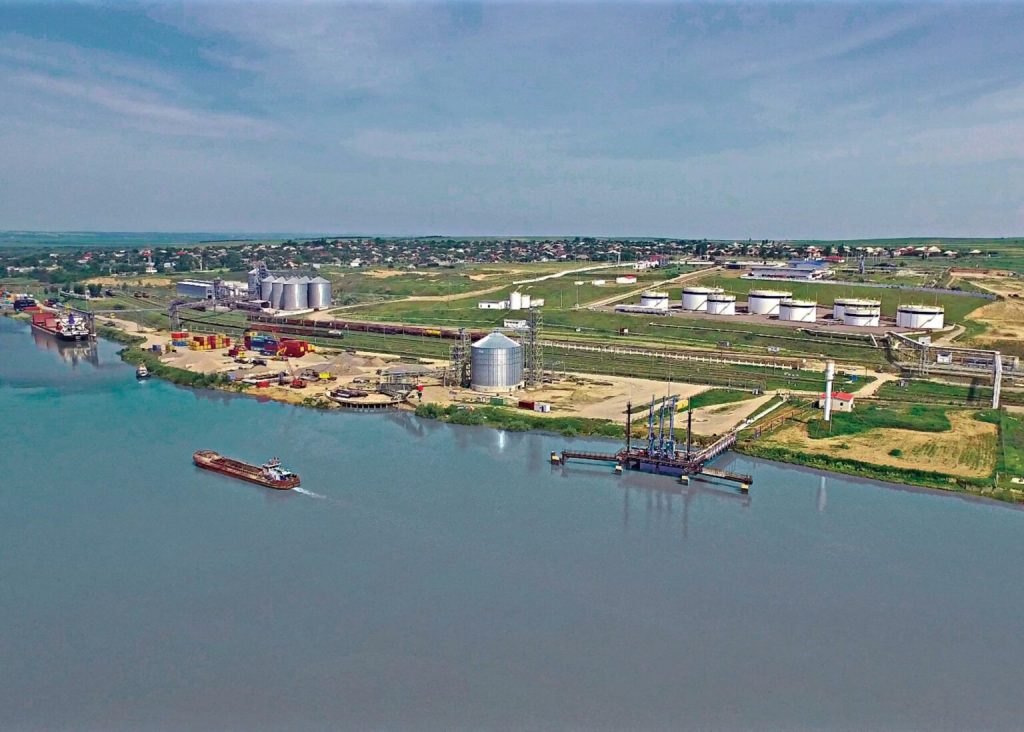
 Bulgaria
 Hungary
 Romania