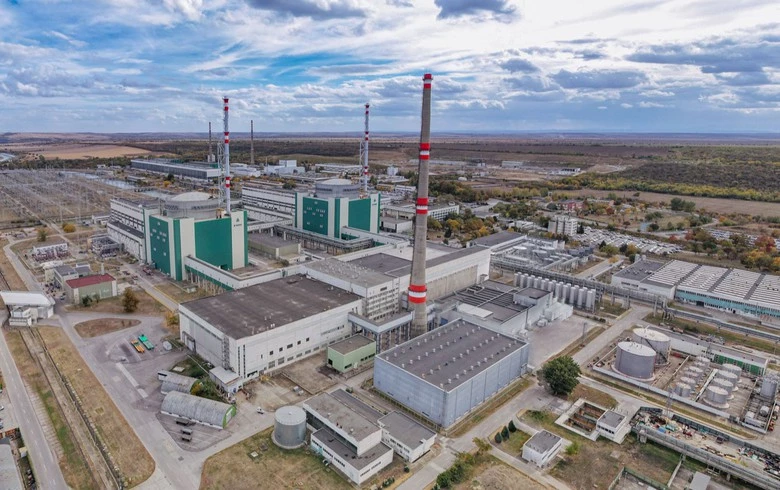


Ukraine and Moldova held the Third Black Sea Security Conference of the International Crimea Platform
 Ukraine
25.03.2026
Ukraine
25.03.2026
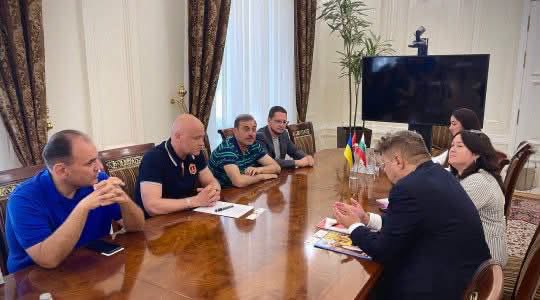
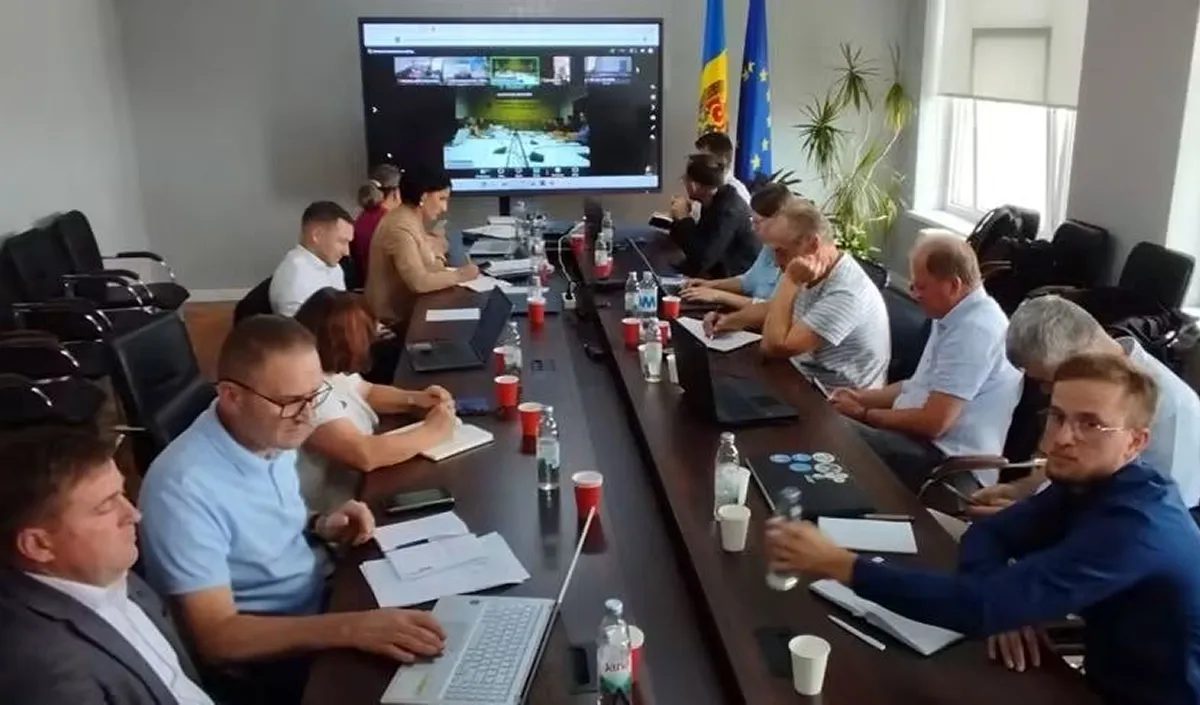
On 23 March 2026, Chisinau hosted the Third Black Sea Security Conference of the International Crimea Platform, organized under the auspices of the International Crimea Platform with the participation of Ukraine and the Republic of Moldova.
The Moldovan side officially confirmed that the event brought together delegations from more than 30 countries, as well as representatives of international and regional organizations. Previous conferences were held in Bucharest in 2023 and Sofia in 2024.
The conference was co-organized by the relevant institutions of Ukraine and Moldova with the support of the European Commission and in partnership with Media Center Ukraine. The programme focused on the security situation in the Black Sea, the consequences of Russia’s aggression against Ukraine, the functioning of the corridor to Ukrainian ports, countering maritime threats, and strengthening regional security cooperation. These thematic priorities were reflected both in the conference concept paper and in the official statements of the organizers.
Among those taking part in the opening of the event were Ukraine’s Minister of Foreign Affairs Andrii Sybiha, who joined online, Deputy Prime Minister and Minister of Foreign Affairs of Moldova Mihai Popșoi, Moldova’s Minister of Defence Anatolie Nosatîi, and Secretary General of the Permanent International Secretariat of BSEC Lazar Comănescu. Participants were also addressed by video message from EU High Representative Kaja Kallas and European Commissioner for Enlargement Marta Kos. It was additionally reported that State Secretary of the Ministry of Foreign Affairs of Moldova Valeriu Mija took part in the closing section of the event.
According to the organizers, a particular emphasis of the conference was placed on the strategic importance of the Black Sea for European security. In remarks circulated by the Crimea Platform, European Commissioner Marta Kos stressed that Black Sea security is an issue not only of regional, but also of pan-European significance. This underlines the gradual consolidation of the Black Sea dimension within the EU agenda as an element of the broader security architecture of the continent.
An additional element of the event was the photo exhibition “War: The Information Backstage”, prepared by the Media Center Ukraine team and displayed in the lobby of the Palace of the Republic in Chisinau. It visualized Ukraine’s experience under conditions of full-scale war and served as an important communicative complement to the security discussion.
IDR Comment
Experts of the Institute of Danube Research regard the holding of the third Black Sea Security Conference specifically in Chisinau as politically and strategically significant. It demonstrates that the security agenda of the Black Sea region is no longer confined solely to littoral states, but encompasses a broader circle of countries for which stability in the Black Sea directly affects transport corridors, trade, energy, and European security as a whole.
The conference testified to the further institutional strengthening of the Crimea Platform as a forum linking the issue of the de-occupation of Crimea with the broader Black Sea and European security context. In practical terms, this means that the issue of Crimea is becoming ever more clearly embedded in discussions on freedom of navigation, protection of maritime routes, deterrence of military risks, and the resilience of logistical corridors in the Black Sea.
IDR Director Vitaliy Barvinenko noted that the joint organization of the conference by Ukraine and Moldova signals a deepening of regional interaction between states that directly experience the consequences of Russian aggression and the related hybrid threats.
“In this sense, the Chisinau conference is not only a diplomatic event, but also evidence of the formation of a denser network of Black Sea coordination, where security, European integration, and infrastructure resilience are increasingly viewed, unquestionably, as interconnected categories,” Vitaliy Barvinenko added.
Experts also note that for Ukraine the importance of this conference lies in the fact that it sustains international attention to the security situation in the Black Sea at a time when the maritime dimension of the war has a direct impact on exports, port operations, and the functioning of critical corridors. For Moldova, it is an opportunity to consolidate its position as an active participant in the regional security dialogue. For the EU, it is yet another argument in favour of treating the Black Sea area as one of the key zones of Europe’s strategic resilience.
 Moldova

 Serbia
 Bulgaria
 Hungary
 Romania

 Danube