

Ukraine and Italy strengthen cooperation in seafarer training
 Ukraine
13.05.2026
Ukraine
13.05.2026
A study visit of the Ukrainian delegation took place in Genoa, Italy, focusing on the introduction of modern procedures for assessing the knowledge and professional skills of seafarers. The visit was held on 20–24 April within the framework of the Twinning project “Institutional Support to the State Service of Maritime, Inland Waterway Transport and Shipping of Ukraine in the Implementation of the EU Acquis, Norms and Standards on Maritime Safety.”
According to the Shipping Administration of Ukraine, the visit was organized by the Italian Coast Guard together with the Italian Shipping Academy. Representatives of the Shipping Administration and the Ministry for Development of Communities and Territories of Ukraine took part in the programme.
The training agenda covered key practical aspects of the Italian system of seafarer training, assessment and certification. The Ukrainian delegation visited the Italian Shipping Academy, the San Giorgio Technical Institute for Transport and Logistics, and the A. De Rubertis training centre of the Italian Coast Guard.
During the visit, Ukrainian specialists studied the organization of training courses, internships, online learning, simulator-based training, examination procedures, certificate issuance, internal quality control and audit mechanisms. Particular attention was paid to the verification of seafarers’ professional competence and to information security.
An important part of the programme was the meeting with the Head of the Maritime Directorate of the Liguria Region and Commander of the Port of Genoa, Inspector Admiral Antonio Ranieri. The Ukrainian side emphasized that the implementation of Italian experience would help improve the national system for assessing seafarers in line with modern European and international standards of transparency, quality and efficiency.
IDR comment
The Institute of Danube Research notes that cooperation between Ukraine and Italy in the field of seafarer training has not only sectoral but also strategic importance. It concerns one of the key components of Ukraine’s integration into the European maritime area — the harmonization of standards for education, certification, professional assessment and quality control in shipping.
For Ukraine, this is particularly important under wartime conditions, when the maritime sector simultaneously supports economic resilience, export logistics and the preservation of human capital. Professional seafarer training, transparent assessment procedures and recognition of qualifications directly influence the competitiveness of Ukrainian specialists in the international labour market.
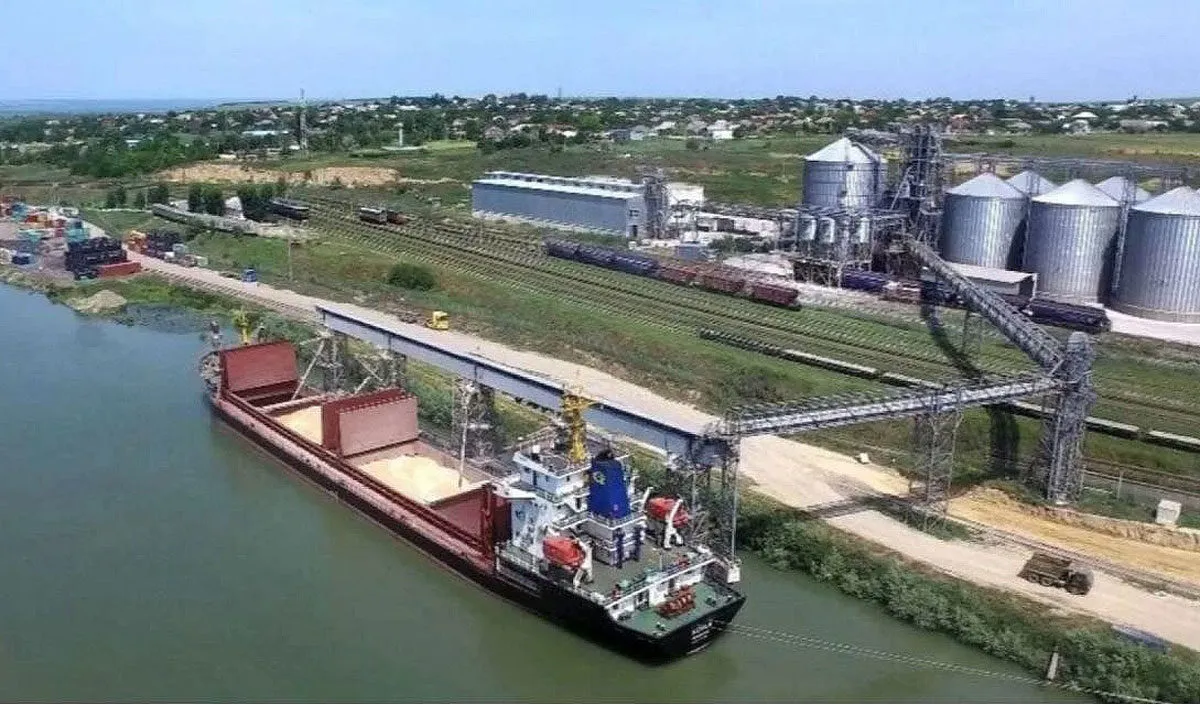
Such initiatives are also important for the Ukrainian Danube region. Since 2022, the Danube ports of Izmail, Reni and Ust-Dunaisk have become essential elements of Ukraine’s export and logistics resilience. Their effective operation requires not only infrastructure modernization, but also high-quality staff training in European procedures for safety, management, certification and digital control.
According to IDR experts, Italy’s experience is valuable for Ukraine because it combines three key elements: practice-oriented maritime education, high safety standards and institutional quality control. This model may be useful for the further development of Ukraine’s seafarer training system, particularly in the context of adaptation to the EU acquis and the standards of the International Maritime Organization.
In a broader context, Ukrainian-Italian cooperation in maritime education strengthens Ukraine’s position as a future full-fledged participant in European transport and maritime policy. For post-war recovery, this means building not only modern port infrastructure, but also professional human capital, without which the long-term competitiveness of Ukraine’s maritime sector is impossible.
 Moldova

 Serbia
 Bulgaria
 Hungary
 Romania

 Danube