

Slovenia and Hungary Agree to Build a Direct Gas Connection
 Hungary
24.03.2026
Hungary
24.03.2026
On 19 March 2026, Hungary’s gas transmission system operator FGSZ and Slovenia’s gas transmission operator Plinovodi signed a letter of intent on the construction of a new cross-border gas pipeline between the two countries. The document confirms the political and technical readiness of both sides to move forward with the implementation of a direct gas connection project, which has not previously existed between Hungary and Slovenia.
According to FGSZ, Slovenia remained the only neighbouring country with which Hungary had no direct gas transmission interconnection. In this context, the planned pipeline is viewed as a strategic infrastructure project capable of closing an important gap in the regional energy network.
The new interconnector is regarded as a project of both bilateral and wider regional importance. According to the parties involved, it is expected to diversify supply routes, improve access to gas storage facilities in the region, and increase the flexibility and reliability of gas supply across the broader Central European space. The Hungarian side also links the project to the potential development of an Italy–Slovenia–Hungary gas corridor in the medium term.
Based on the announced technical parameters, the initial transmission capacity of the future pipeline will amount to around 50,000 cubic metres per hour, or approximately 440 million cubic metres annually. At a later stage, this capacity is expected to increase to 190,000 cubic metres per hour, equivalent to about 1.7 billion cubic metres per year. The projected length of the pipeline is around 115 kilometres, of which approximately 40 kilometres, together with a compressor station, will be built on Hungarian territory.
Importantly, the project is being designed as technologically adaptive infrastructure from the outset. According to the available information, the future connection will be technically suitable not only for the transportation of natural gas, but also for hydrogen and biomethane. This approach reflects an attempt to combine short-term energy security priorities with the long-term logic of decarbonisation and energy network modernisation.
IDR comment
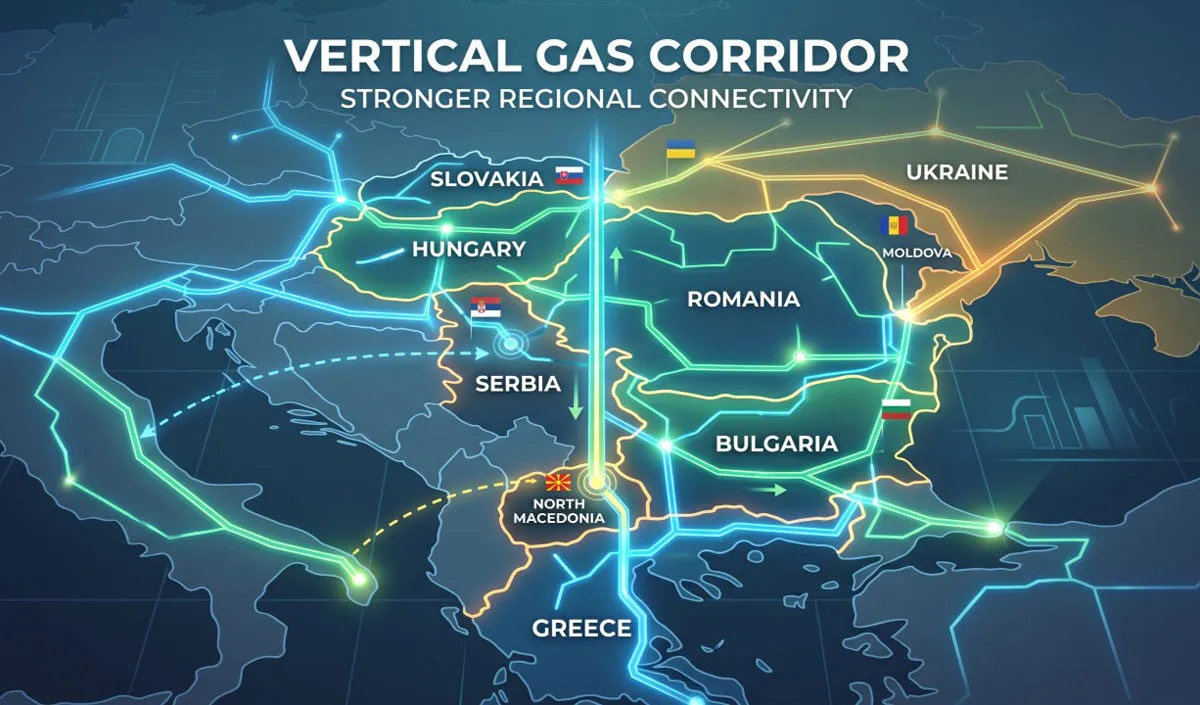
The agreement between Slovenia and Hungary should be viewed not merely as another bilateral energy project, but as part of a broader reconfiguration of the gas map of Central and South-Eastern Europe. Amid the ongoing transformation of the European energy market, new interconnectors are increasingly acquiring the role of strategic resilience instruments: they expand access to alternative sources and routes, reduce dependence on a limited number of entry points, and create preconditions for a more integrated regional gas market.
The fact that the future route may potentially provide Hungary with additional access to LNG through Italian infrastructure further enhances the project’s geoeconomic significance. In a broader sense, this decision is also indicative for the Danube and Black Sea region, where energy security is becoming ever more dependent on the development of intersystem connections capable of operating both within the traditional gas model and within a future low-carbon energy architecture.
For this reason, the Slovenia–Hungary interconnector should be assessed not only as an investment in supply reliability, but also as an investment in the long-term adaptability of regional energy infrastructure.
 Moldova
 Ukraine
 Serbia

 Bulgaria
 Romania

 Danube