

Serbia expands its high-speed rail network as the Balkans strengthen the European section of the Middle Corridor
 Serbia
14.09.2026
Serbia
14.09.2026
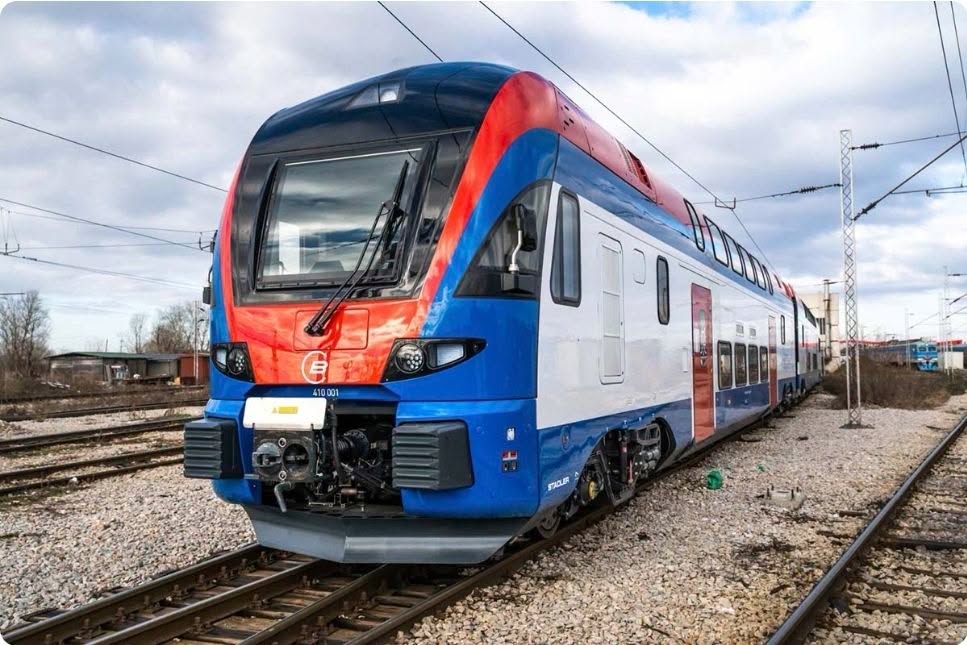
Serbia is not limiting the modernisation of its railway infrastructure to the Belgrade–Budapest route. The country is also preparing to develop high-speed connections southwards, towards Niš and the borders of neighbouring Balkan states.
Serbian President Aleksandar Vučić has announced that direct rail services between Belgrade and Budapest are expected to begin in September or, at the latest, in early October 2026. Testing of ETCS Level 2 signalling and safety systems has been conducted on the Hungarian section, along with trial runs of Serbian high-speed trains.
The estimated journey time between the two capitals will be approximately three hours and twenty minutes. However, previously announced launch dates for the service have been postponed several times.
The next strategic project is the modernisation of the approximately 230-kilometre Belgrade–Niš railway. The project is intended to increase operating speeds to 200 km/h and is scheduled for completion in 2029.
The European financing package for the project amounts to approximately €2.2 billion. It includes loans from the European Investment Bank and the European Bank for Reconstruction and Development, as well as an EU grant of €598 million.
The Bulgarian section
Bulgaria is simultaneously modernising the railway connection between Sofia and the Serbian border. A consortium of Hitachi Rail and CERB has been awarded a contract to implement the European Rail Traffic Management System on the 35-kilometre double-track Voluyak–Dragoman section.
The project includes the installation of ETCS Level 1 equipment and GSM-R communications. The new digital infrastructure will support speeds of up to 160 km/h, improve safety and ensure technological interoperability with the European railway network.
The section forms part of the Orient/East–Med transport corridor, which connects Central and Southeastern Europe.
The Turkish extension
Another component of the emerging regional network is the Halkalı–Kapıkule railway, which is intended to provide a faster connection between Istanbul and the Turkish–Bulgarian border.
The route has a total length of 229 kilometres. It is being developed as an electrified double-track line for both passenger and freight transport, with a design speed of up to 200 km/h. Test runs have already been conducted on the 153-kilometre Çerkezköy–Kapıkule section, which is expected to enter service by the end of 2026.
Once the entire project is completed, passenger travel time between Halkalı and Kapıkule is expected to fall from four hours to 90 minutes, while freight transit time should decline from 8.5 to 3.5 hours. Annual freight capacity is projected to increase from 1.5 million to 9.5 million tonnes.
Comment by the Institute of Danube Research
The railway projects being implemented in Serbia, Hungary, Bulgaria and Türkiye should be viewed not as isolated national initiatives but as components of a broader transformation of the transport architecture of Central and Southeastern Europe. In the longer term, they could form an interconnected network extending from Budapest through Belgrade and Sofia to Istanbul, with access to routes towards the South Caucasus and Central Asia.
For the Middle Corridor, these investments represent the gradual strengthening of its European section. Railway development across the Balkans can reduce delivery times, increase capacity and provide additional routes between the Caspian region, Türkiye and the European Union’s internal market.
However, upgrading individual sections does not yet create a continuous high-speed corridor. Its effectiveness will depend on interoperable signalling systems, the removal of infrastructure bottlenecks, the development of freight terminals, coordinated timetables and tariffs, and faster border and customs procedures.
The coordination of these components will determine whether large-scale national investments can be transformed into a single competitive railway axis between Europe and Asia.
 Moldova
 Ukraine

 Bulgaria
 Hungary
 Romania

 Danube