

Reviving the Danube Together: INTERREG and Cross-Border Partnership Launch the Revitalisation of Paradeisinsel Island
 Austria
27.03.2026
Austria
27.03.2026
On 6 March 2026, an official groundbreaking ceremony was held on Paradeisinsel Island, marking the start of large-scale revitalisation works on one of the Danube’s unique river islands. The event became an important signal of strengthened practical cooperation in the field of ecological restoration of transboundary river sections in the Slovak-Austrian border region.
Among the participants was Austria’s Federal Minister for Innovation, Mobility and Infrastructure, Peter Hanke, whose presence underscored the political importance of the project and its relevance for contemporary Danube environmental policy.
A key role in implementing the initiative is played by the INTERREG Slovakia–Austria DANUBEREST project, which supports the restoration of the downstream section of the island’s shoreline. The project is being implemented by three specialised cross-border partners: BROZ – ochranárske združenie, via donau – Österreichische Wasserstraßen-Gesellschaft mbH, and Nationalpark Donau-Auen GmbH. Their long-standing activity in the Slovak-Austrian border area provides the institutional foundation for long-term cooperation in restoring the Danube’s natural ecosystems.
The main objective of DANUBEREST is to improve the condition of river habitats and adjacent wetlands within the ecologically functional Alpine-Carpathian Corridor. The planned works include the restoration of the natural shoreline, ecological improvements to river processes, enhancement of biodiversity, recovery of the river’s natural dynamics, and strengthening of climate resilience along this section of the Danube.
Importantly, these measures are being implemented in synergy with the Horizon Europe DANUBE4all project, within which innovative river restoration approaches were developed together with partners such as BOKU Vienna and DANUBEPARKS. The works on Paradeisinsel have been identified as one of DANUBE4all’s key pilot actions and are expected to serve as a model for future nature-based initiatives across the Danube Region.
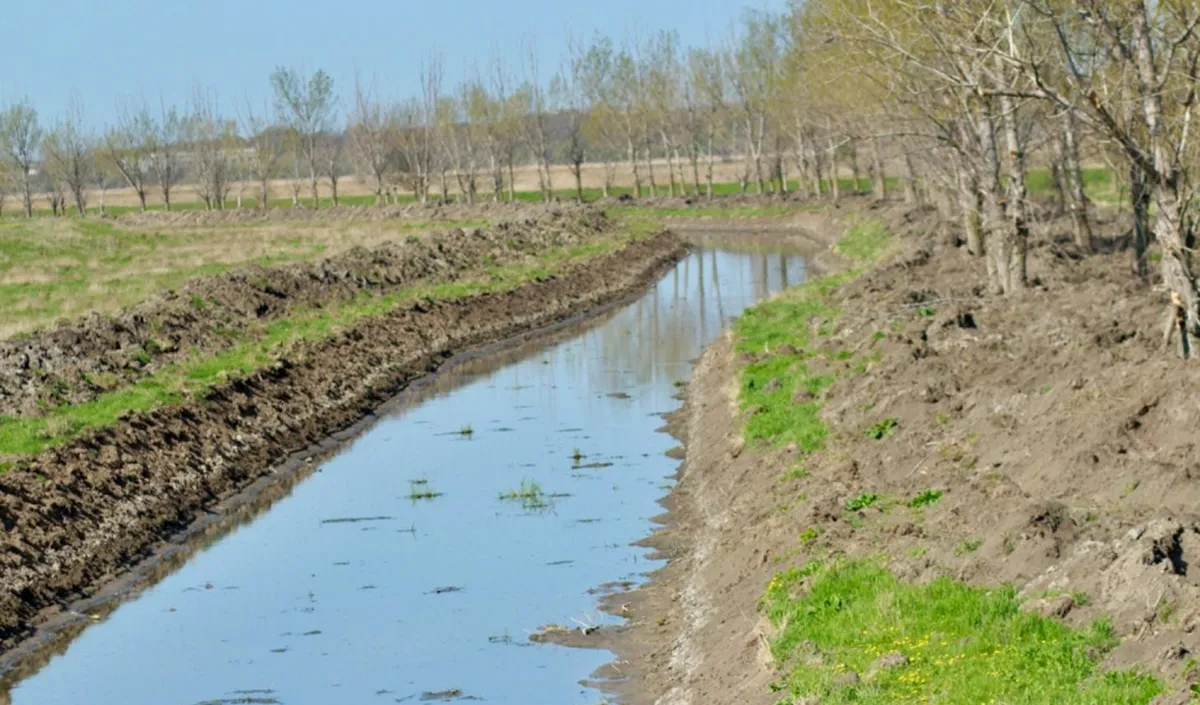
An additional contribution is being made by the European Open Rivers Programme through the Lost Paradises initiative, which supports lowering the groyne root structures and creating a continuous side channel behind the island. This step is important for improving hydrological connectivity, restoring fish habitats, and supporting the natural dynamics of sediment transport.
Overall, the project demonstrates that the combination of cross-border partnership, European financial instruments, and scientifically grounded solutions can generate long-term environmental benefits. It is not only about the local restoration of one section of the Danube, but also about shaping a practical model of river territory management that can be scaled up to other parts of the basin.
IDR Comment
For the Danube Region, this project is a vivid example of the transition from declarative support for ecological restoration to concrete engineering and nature-based action. Particularly noteworthy is the fact that DANUBEREST brings together several European programmes and partnerships around a common goal: increasing the ecological functionality of river systems. This approach is highly relevant for the Ukrainian part of the Danube Basin as well, where balancing navigation, security, biodiversity conservation, and climate adaptation is becoming a strategic issue. The Paradeisinsel experience confirms that river restoration can serve not only as an environmental task, but also as an instrument for strengthening cross-border resilience, local development, and a new quality of international cooperation along the Danube.
 Moldova
 Ukraine

 Serbia
 Bulgaria
 Hungary
 Romania
 Danube