

Nibulon to Open an Office in Romania for Operations on the Danube
 Ukraine
17.03.2026
Ukraine
17.03.2026
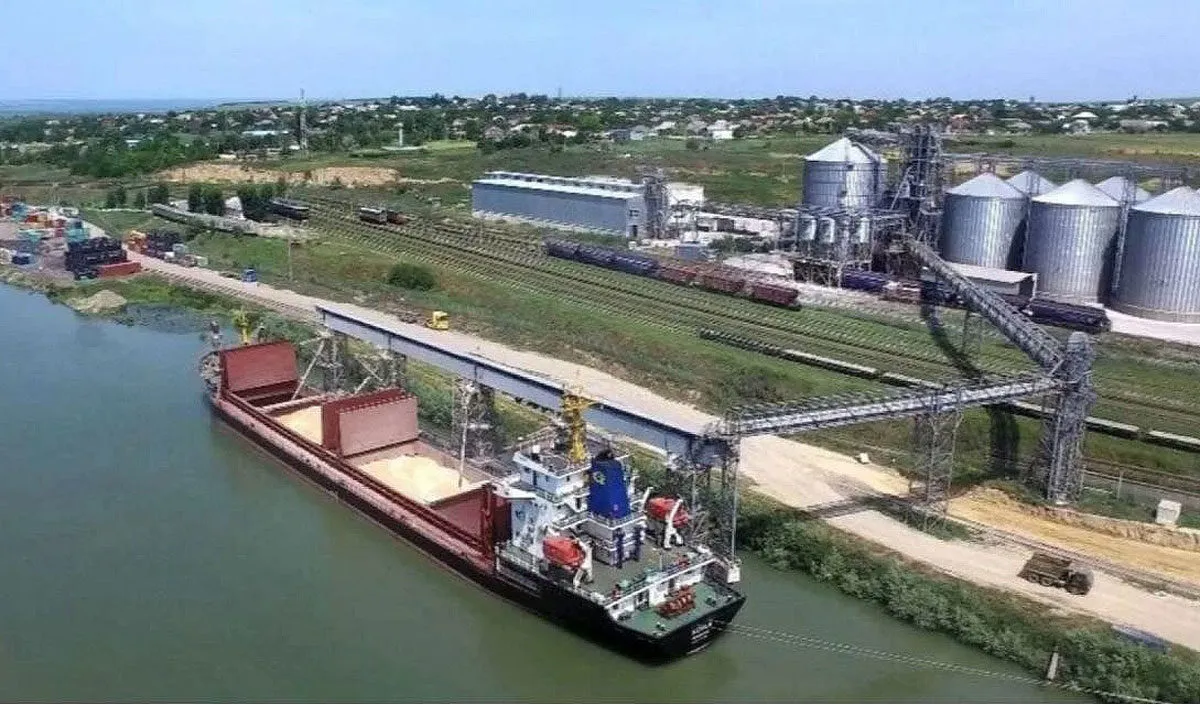
Agricultural holding Nibulon is opening an office in Romania in order to strengthen its operations along the Danube route. This was announced by the company’s owner and CEO, Andrii Vadatursky, in an interview with LIGA.net.
According to him, the company has already begun systematic work on the European market through its office in the Netherlands, while the next step is to institutionalize its presence in Romania. The new office is expected to ensure more effective coordination of Danube operations, expand the company’s trading presence, and deepen its integration into regional logistics chains.
“We began working on the European market through our office in the Netherlands. We are opening an office in Romania for work on the Danube. Of course, this is impossible without risk control, so we have strengthened our Swiss office with risk management specialists,” Andrii Vadaturskyi noted.
Among the company’s strategic plans are the expansion of the geography of product origin, particularly through Romania, the opening of new markets for Ukrainian products, as well as the implementation of investment projects related to the development of logistics and trade infrastructure.
Against the backdrop of wartime challenges, changing export routes, and the structural transformation of Black Sea–Danube logistics, this step demonstrates the determination of Ukrainian business not only to adapt to new conditions, but also to build its own regional platform of presence within EU countries.
IDR Comment
The opening of a Nibulon office in Romania demonstrates that Ukrainian agri-logistics companies are moving from a model of situational response to a model of long-term positioning in the Danube region. This may be regarded as the formation of a new architecture of Ukrainian business presence in the European space, where the Danube is becoming not merely an alternative export route, but a полноценная zone of strategic economic interaction.
From the perspective of regional development, such a step reinforces the significance of the Ukrainian-Romanian Danube segment as a key element of food, transport, and investment security. At the same time, it highlights the growing role of risk management, diversification of product origin, and transnational coordination as fundamental instruments of competitiveness for the agricultural sector under conditions of prolonged instability.
For Ukraine, this is also an important signal of the need for further systemic development of Danube ports, border infrastructure, multimodal logistics, and institutional cooperation with Romania within the framework of the shared economic space of the Lower Danube.
 Moldova


 Serbia

 Bulgaria
 Hungary
 Romania




 Danube