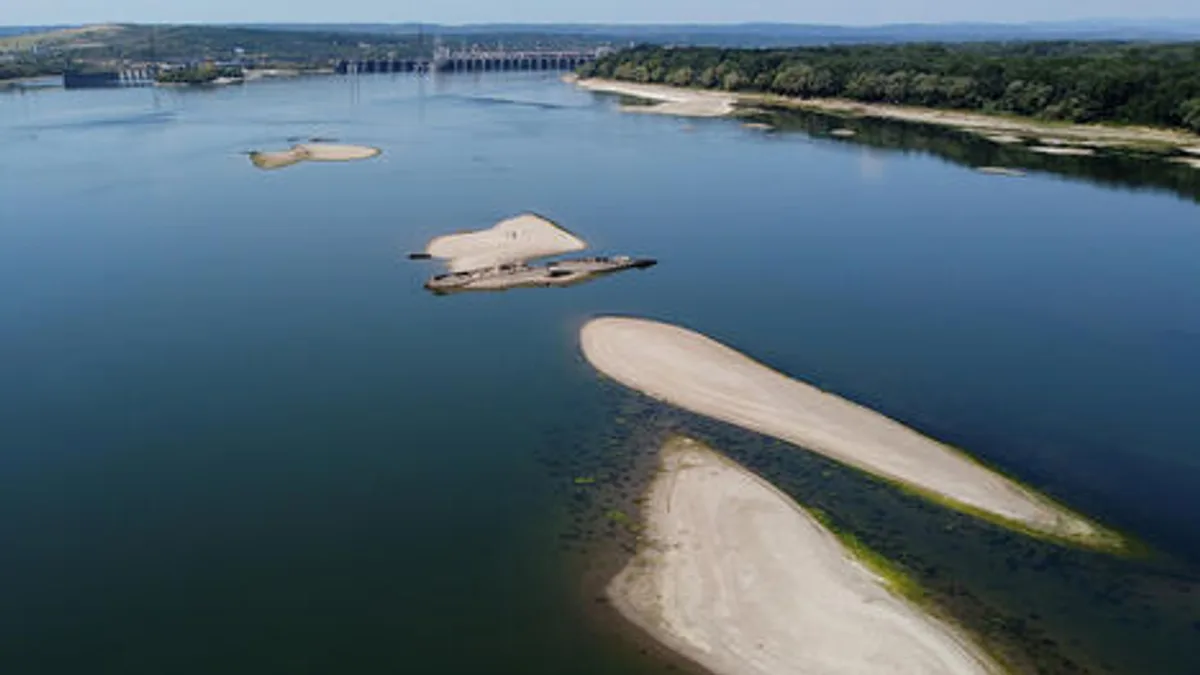


Low water levels in the Dniester remain a serious concern: rainfall is unlikely to change the overall situation
 Moldova
11.05.2026
Moldova
11.05.2026
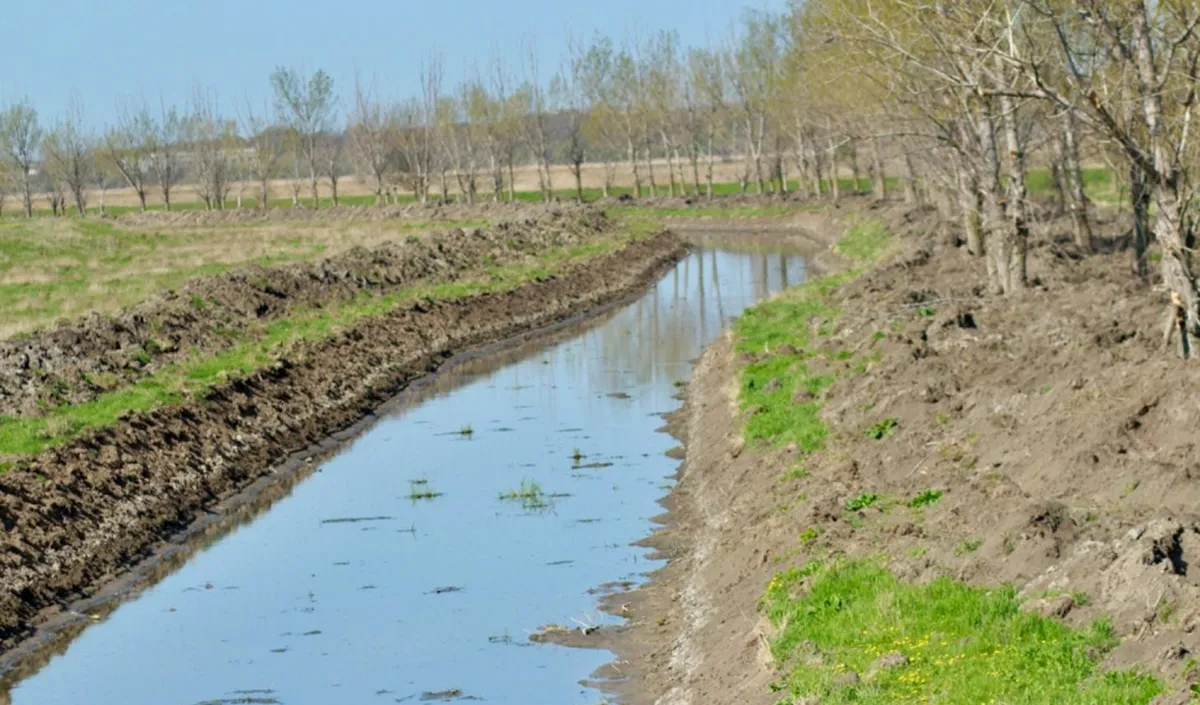
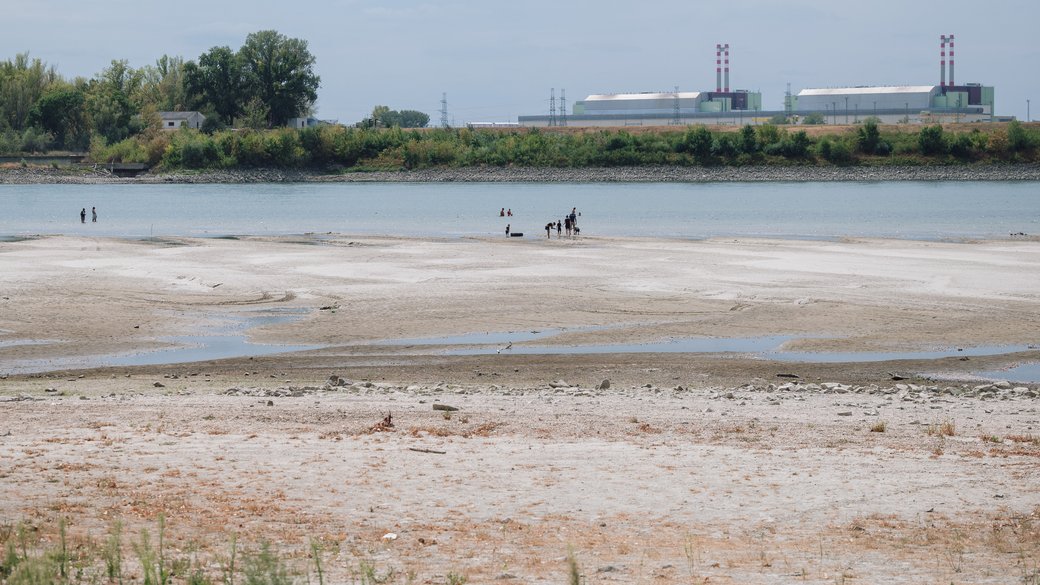
The water situation in the Dniester River continues to raise serious concern among environmental experts and water management specialists. According to Moldovan media reports citing Ilia Trombitsky, Executive Director of Eco-TIRAS, the runoff from the Carpathians in the upper reaches of the river had fallen to 66 m³/s by the end of the working week. At the same time, the discharge in the lower Dniester remained unchanged at around 100 m³/s. As a result, the water level in the Dniester Reservoir, which plays a key role in maintaining water availability in the Moldovan section of the river, dropped to 115.5 metres.
According to Trombitsky, expected rainfall may have only a limited effect and is unlikely to significantly change the overall hydrological situation. This indicates that the problem of low water levels in the Dniester is not merely a short-term weather-related issue, but a systemic challenge linked to long-term changes in the water balance, land use practices, the condition of tributaries, reservoirs, and flow regulation regimes.
Additional importance is given to the public hearings scheduled for 13 May 2026 in the environmental committee of the Parliament of the Republic of Moldova, where the state of the Dniester is expected to be discussed. Among the proposed topics are large-scale afforestation of the river basin, creation of water-protection forest belts along the banks, a ban on ploughing land directly near the waterline, the transition of farmers to drought-resistant crops and drip irrigation technologies, the removal of illegal dams built for irrigation ponds or fish farming, restrictions on the use of artesian water for irrigation during periods of extreme low water, and a review of legislation on the use of mineralised waters for irrigation.
IDR comment
For Ukraine, the issue of the Dniester’s water availability is also of direct relevance. The Dniester is a transboundary river, and its ecological condition depends on coordinated action by Ukraine and Moldova, effective basin management, monitoring, data exchange, and adaptation to climate change.
According to Vitalii Barvinenko, Director of the Institute of Danube Research, the current situation with the Dniester shows that water security is increasingly becoming not only an environmental issue, but also a matter of public governance, regional resilience, and transboundary coordination.
“Rainfall may temporarily improve hydrological indicators, but it does not solve the structural problem. If a river basin loses its capacity to accumulate and retain water, if floodplains are degraded, small tributaries become silted, and agricultural water use is not adapted to new climate conditions, each period of low water will become increasingly severe. The Dniester needs not situational responses, but a permanent basin policy — with coordinated actions by Ukraine and Moldova, transparent monitoring, environmentally justified reservoir regulation, and a revision of land use practices in riparian zones.”
IDR stresses that, for Ukraine, this issue should be viewed in the broader context of water security in the southern regions, climate adaptation, and the implementation of European approaches to integrated river basin management. Particular attention should be paid to the restoration of natural water-protection areas, stronger control over groundwater use, an inventory of hydraulic structures, and the development of joint Ukrainian-Moldovan mechanisms for early response to hydrological risks.
Thus, the current low water situation in the Dniester is not simply a seasonal natural phenomenon, but an indicator of accumulated governance, environmental, and climate-related challenges. Without a transition to systematic basin management, even favourable rainfall will not be sufficient to ensure the long-term stabilisation of the river’s water regime.
 Ukraine

 Serbia
 Bulgaria
 Hungary
 Romania

 Danube