

Budapest’s iconic Danube swim crossing returns in 2026 after a long break
 Hungary
18.05.2026
Hungary
18.05.2026
In 2026, Budapest will revive one of its most recognizable urban sporting traditions — the Generali OWT Danube Swim Crossing, a swim across the Danube from Pest to Buda. The event is scheduled for 29 August 2026 and is expected to bring together around one thousand participants.
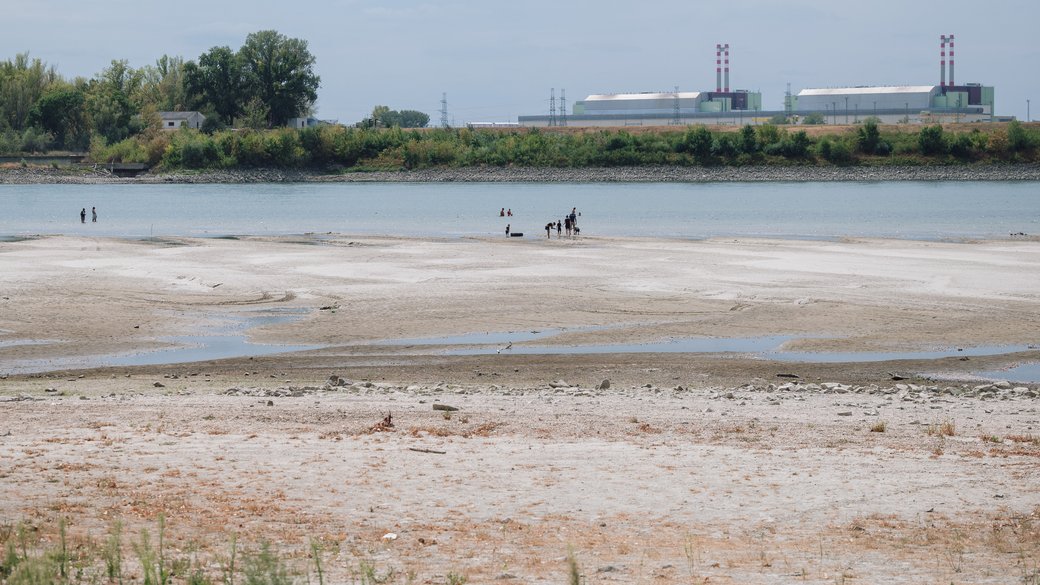
The swim will take place in the very heart of the Hungarian capital. Participants will cover an approximately 500-metre distance between the areas near Corvinus University of Budapest and the Budapest University of Technology and Economics. In practice, this means crossing the Danube from Pest to Buda in open water, turning the river into an urban space for sport, recreation and public interaction.
According to Balázs Mészés, founder of the Open Water Tournament, the first such Danube swim in Budapest was organized back in 2016 near Liberty Bridge together with the Pest County Search and Rescue Service. That event became the starting point for the development of the OWT series, which aims to open not only the Danube but also other waters of Hungary to open-water swimming enthusiasts.
In previous years, the swim in the capital was suspended due to significant organizational and safety-related costs. The initiative has now been revived with the support of Generali and the Generali a Biztonságért Alapítvány foundation, making it possible to return the event to Budapest’s urban sports calendar. The swim will take place as part of the Generali Night Run Budapest programme, which will continue throughout the day.
Both professional swimmers and amateurs are expected to take part. The start is planned on the embankment in front of Corvinus University, while the finish area will be located near the Budapest University of Technology and Economics. Participants will enter the water in waves from a floating mobile dock, with the water temperature expected to be around 23°C.
Special attention will be paid to safety. In accordance with the rules of the Danube Water Police, the swimming corridor will be secured by 12 motor rescue boats, while around 30 professional rescuers will monitor the swimmers in the water. The safety component will be co-organized by the Pest County Search and Rescue Service, which has operated as a volunteer rescue service for more than 20 years.
IDR comment
The Institute of Danube Research notes that the return of the Danube swim crossing in Budapest is significant not only as a sporting event. It is an example of how a major European river can be integrated into urban life not only as a transport artery or natural boundary, but also as a space for active recreation, public participation, tourism and the formation of local identity.
For Danube cities, this practice is important from the perspective of modern riverfront governance. Budapest demonstrates a model in which recreational use of the Danube is combined with high safety standards, inter-institutional coordination and private-sector participation. This combination — public space, sporting culture, water safety and responsible management — may be useful for other cities of the Danube region.
For Ukraine, this experience is also of practical interest. The Ukrainian Danube region — Izmail, Reni, Kiliia, Vylkove and other communities — has significant potential for the development of event-based, sports, water and ecological tourism. At the same time, such initiatives require not only promotion, but also clear safety procedures, water quality control, coordination with rescue services, border authorities and port structures.
According to IDR experts, the post-war recovery of Ukraine’s Danube territories should include not only the modernization of ports, roads and logistics, but also the return of the river to the everyday life of local communities. The Danube can be not only an economic resource, but also a space for health, culture, tourism and international communication.
In this context, Budapest’s example is indicative: strong Danube cities emerge where the river does not separate the community from the water, but instead becomes part of urban policy, local branding and European identity. For the Ukrainian Danube region, this may serve as an important reference point for future programmes focused on riverfront development, water sports, safe recreation and cross-border tourism.
 Moldova
 Ukraine
 Serbia
 Bulgaria
 Romania
 Danube