

Austria and the Czech Republic Expand Cross-Border River Ecosystem Restoration in the Danube Basin
 Austria
03.11.2026
An international expert conference dedicated to innovative approaches to restoring the Dyje/Thaya, Morava/March and Danube rivers in the context of climate change was held in Vienna.
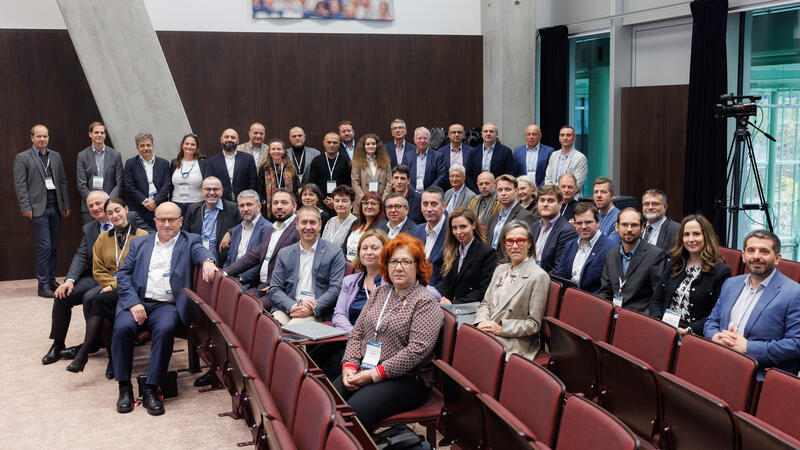
The event, organised by the Austrian waterway management company Viadonau in cooperation with the Czech organisation Povodí Moravy, brought together approximately 60 representatives of research institutions, environmental organisations and river management experts.
The central topic of the conference was the cross-border project Nature Connect Dyje/Thaya, implemented with the support of the Interreg Austria–Czech Republic 2021–2027 programme.
The project aims to restore the natural dynamics of the Thaya River, including reconnecting disconnected meanders on the Czech side and carrying out ecological restoration along approximately 1.6 kilometres of riverbank in Austria.
These measures are expected to enhance biodiversity, improve natural water retention and strengthen the resilience of river ecosystems to droughts and floods.
Conference participants also explored environmental restoration projects along the Danube east of Vienna, including floodplain restoration initiatives and measures to protect sturgeon species.
Commentary by the Institute of Danube Research (IDR)
The experience of Austria and the Czech Republic demonstrates the effectiveness of a cross-border approach to river ecosystem restoration that integrates environmental protection, water resource management and climate change adaptation.
Particular importance should be attached to restoring natural river meanders, floodplains and hydrological connections between rivers and their surrounding landscapes. Such measures can improve natural water retention, enhance the ecological condition of rivers and reduce certain hydrological risks.
For Ukraine, this experience is particularly relevant to restoring water exchange in the Danube Delta, rehabilitating canals and sluices, and implementing nature-based solutions in the Lower Danube region.
According to the Institute of Danube Research, opportunities offered by Interreg, the LIFE Programme and the EU Strategy for the Danube Region (EUSDR) should be further explored to develop joint Ukrainian–Romanian and Ukrainian–Moldovan environmental projects.
River restoration should be regarded as an integral component of transboundary water security, rather than solely as an environmental protection activity.
 Ukraine
 Romania

 Moldova
 Bulgaria
 Hungary
 Danube