

A new alternative road to Bessarabia is planned in Odesa region: a strategic project for the transport infrastructure of the Ukrainian Danube area
 Ukraine
25.03.2026
Ukraine
25.03.2026
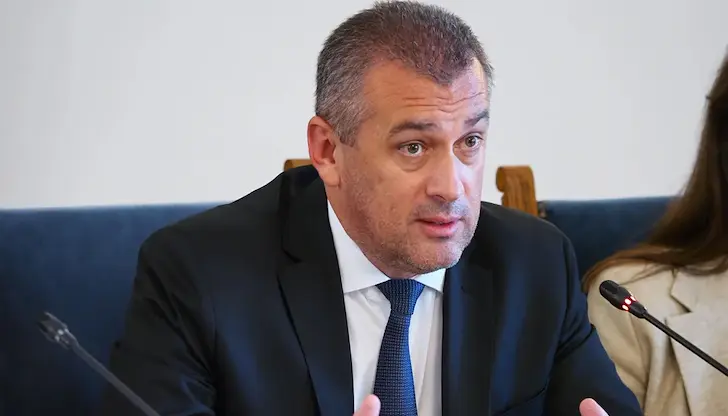
In Odesa region, the issue of constructing a bypass road around Palanka has again moved to the foreground. The project is intended to create a fully Ukrainian route toward Bessarabia, eliminating the current dependence on a section that passes through the territory of the Republic of Moldova. According to Andrii Donchenko, Head of the Restoration and Infrastructure Development Service in Odesa region, preliminary design solutions already exist and envisage the construction of about 10 kilometres of new road. The estimated cost of the project ranges between UAH 10 billion and UAH 20 billion, which currently makes implementation difficult without external financing.
At this stage, the priority of the regional road authority remains the maintenance and repair of the existing road network, while the launch of the Palanka bypass directly depends on securing additional funding or investors. Before construction can begin, the technical documentation must be updated and the design stage completed. At the same time, the Service states that it is ready to move quickly to implementation once the necessary financial resources are available.
The idea of bypassing Palanka is not new. In April 2024, a public procurement tender was announced for the preparation of design documentation for the construction of a section of the M-15 Odesa–Reni highway bypassing Palanka. The expected value of the design work exceeded UAH 34 million, which indicates that the project has already moved beyond a purely conceptual stage, even though its realization still depends on cost and funding sources.
IDR Comment
For the transport infrastructure of the Ukrainian Danube area, the Palanka bypass is not merely a local road project. It has a systemic strategic significance. It concerns a critically important section of the route to the southern part of Odesa region, including logistical directions connected with the Danube ports, border infrastructure, and transport links with Bessarabia. The practical dependence of an internal Ukrainian route on transit through another state creates additional organizational, security, and political risks, which become particularly sensitive under wartime conditions.
From the perspective of regional development, a fully Ukrainian bypass would strengthen the integrity of the southern logistics framework of Odesa region. This matters not only for passenger and freight traffic, but also for the resilience of routes that support the functioning of the Ukrainian Danube area as one of the key directions of Ukrainian export, border, and humanitarian logistics. For this reason, the project should be viewed not simply as road construction, but as an element of national transport security and the long-term infrastructural integration of Ukrainian Bessarabia and the Danube region. This interpretation is also consistent with the route’s direct linkage to the M-15 Odesa–Reni corridor.
At the same time, the declared cost — UAH 10–20 billion for 10 km — shows that implementation will require a special financial model. In this context, a blended financing approach involving state, international, and potentially investment resources appears the most realistic option. If such funding is secured, the Palanka bypass could become one of the most important infrastructure projects in southern Ukraine in terms of increasing the autonomy and reliability of transport connections with Bessarabia and the wider Ukrainian Danube area.
 Moldova

 Serbia
 Bulgaria
 Hungary
 Romania

 Danube